


Execution
Execution
Lesson 22 : Entry Sequence
Lesson 22 : Entry Sequence
Lesson 22 : Entry Sequence
Beginner
Beginner
1 min
1 min
Entry Sequence
Entry Sequence
Entry Sequence
Each entry follows a consistent sequence in price.
Each entry follows a consistent sequence in price.
Each entry follows a consistent sequence in price.
Identify a point of interest in relation to the equilibrium or T-spot
Wait for a candle closure at the point of interest
Price confirms the reversal point through the formation of a protected swing
Identify a point of interest in relation to the equilibrium or T-spot
Wait for a candle closure at the point of interest
Price confirms the reversal point through the formation of a protected swing
Identify a point of interest in relation to the equilibrium or T-spot
Wait for a candle closure at the point of interest
Price confirms the reversal point through the formation of a protected swing
This sequence is fractal across all timeframes; for a reversal to form, it must occur in this structured manner. The process will always be:
This sequence is fractal across all timeframes; for a reversal to form, it must occur in this structured manner. The process will always be:
This sequence is fractal across all timeframes; for a reversal to form, it must occur in this structured manner. The process will always be:
Swing formation
Protected swing
Swing formation
Protected swing
Swing formation
Protected swing
Each provides an opportunity for potential entries.
Each provides an opportunity for potential entries.
Each provides an opportunity for potential entries.
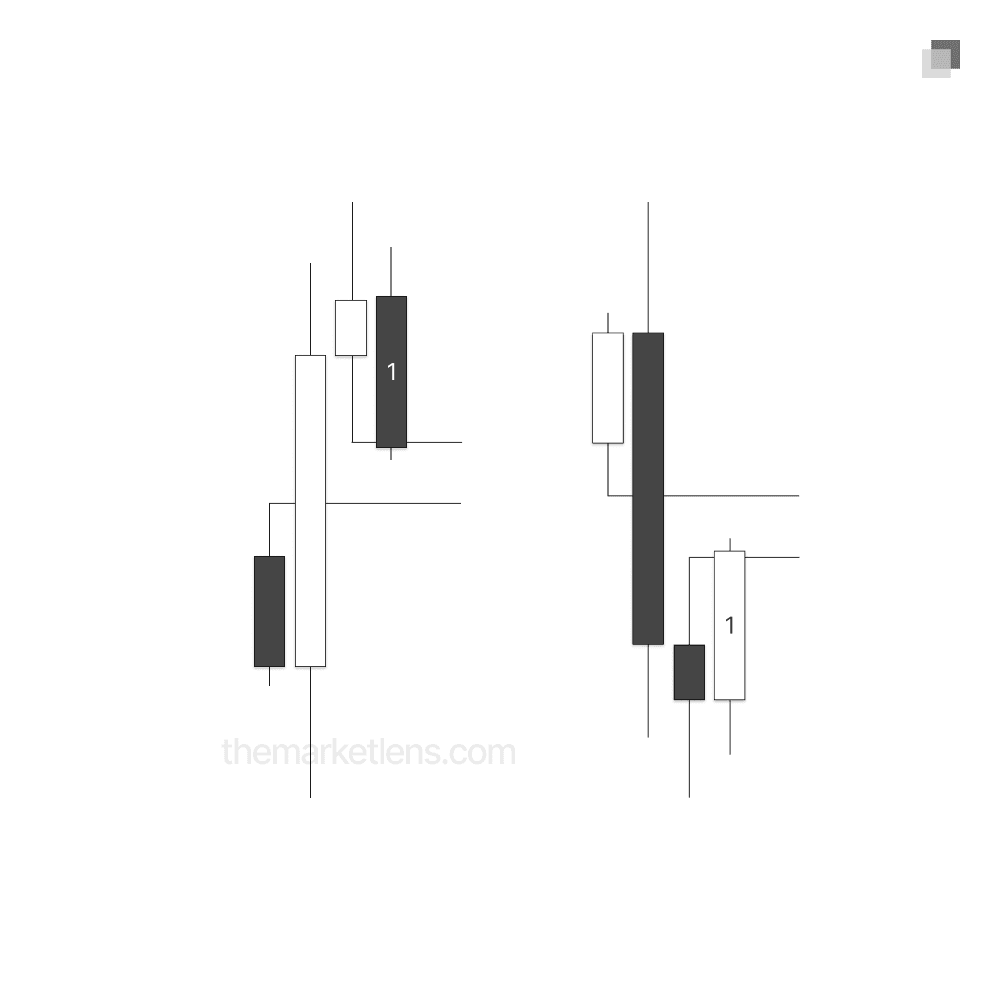
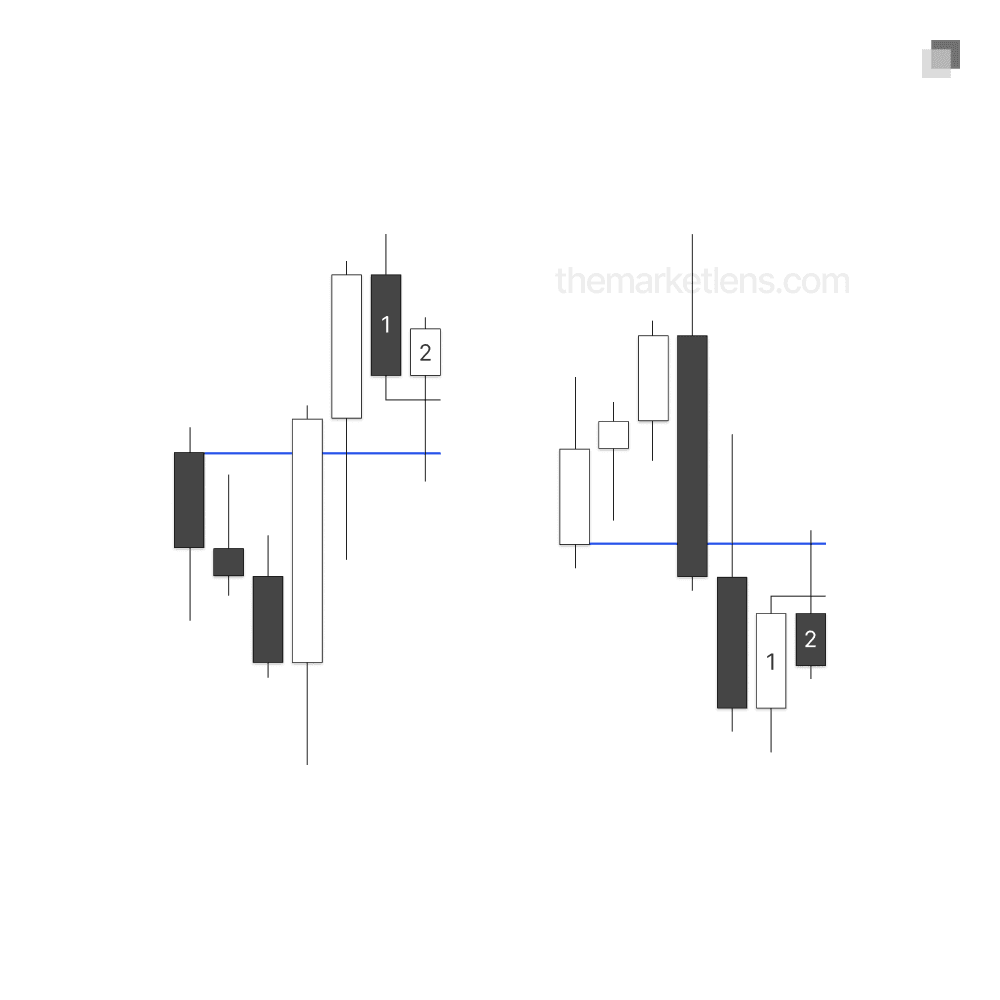
In the example below, the sequence is demonstrated step by step. A fair value gap has been identified as the point of interest. Price then forms a candle closure, representing the swing formation, while simultaneously creating a protected swing. This alignment is considered ideal.
In the example below, the sequence is demonstrated step by step. A fair value gap has been identified as the point of interest. Price then forms a candle closure, representing the swing formation, while simultaneously creating a protected swing. This alignment is considered ideal.
In the example below, the sequence is demonstrated step by step. A fair value gap has been identified as the point of interest. Price then forms a candle closure, representing the swing formation, while simultaneously creating a protected swing. This alignment is considered ideal.
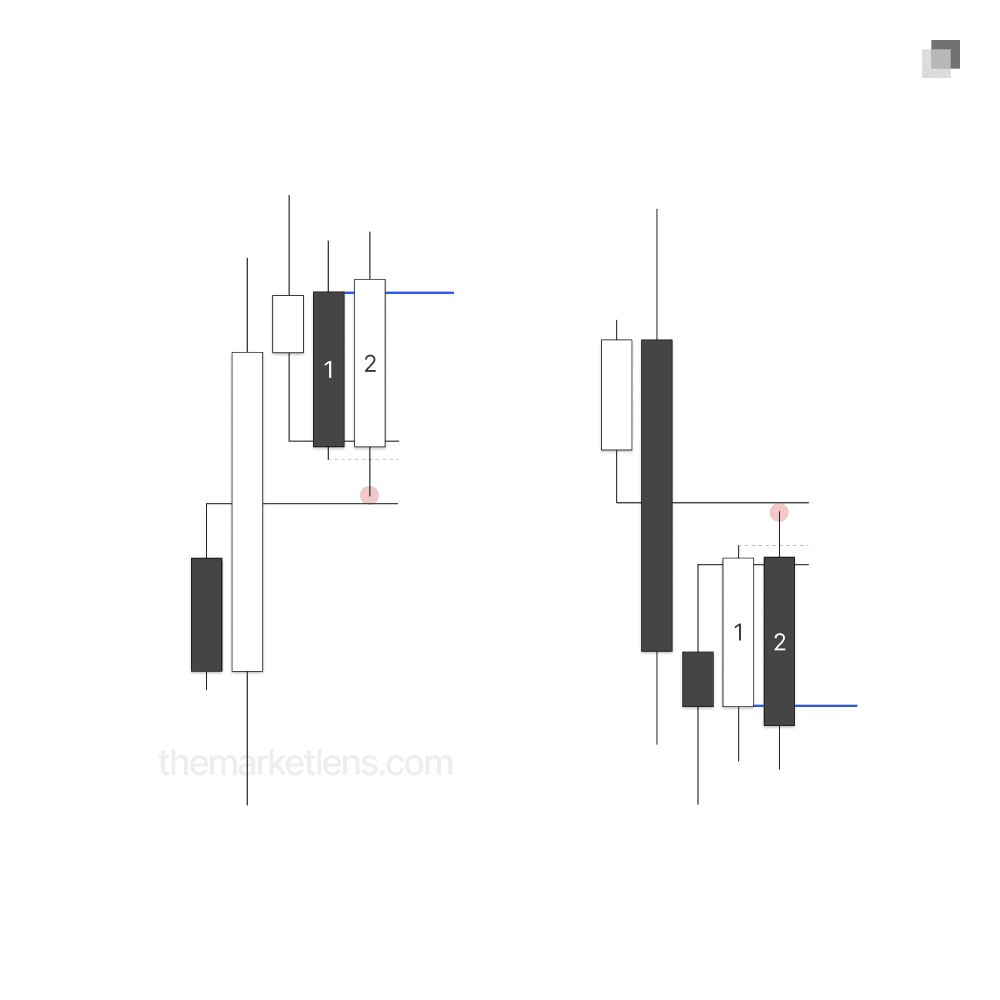
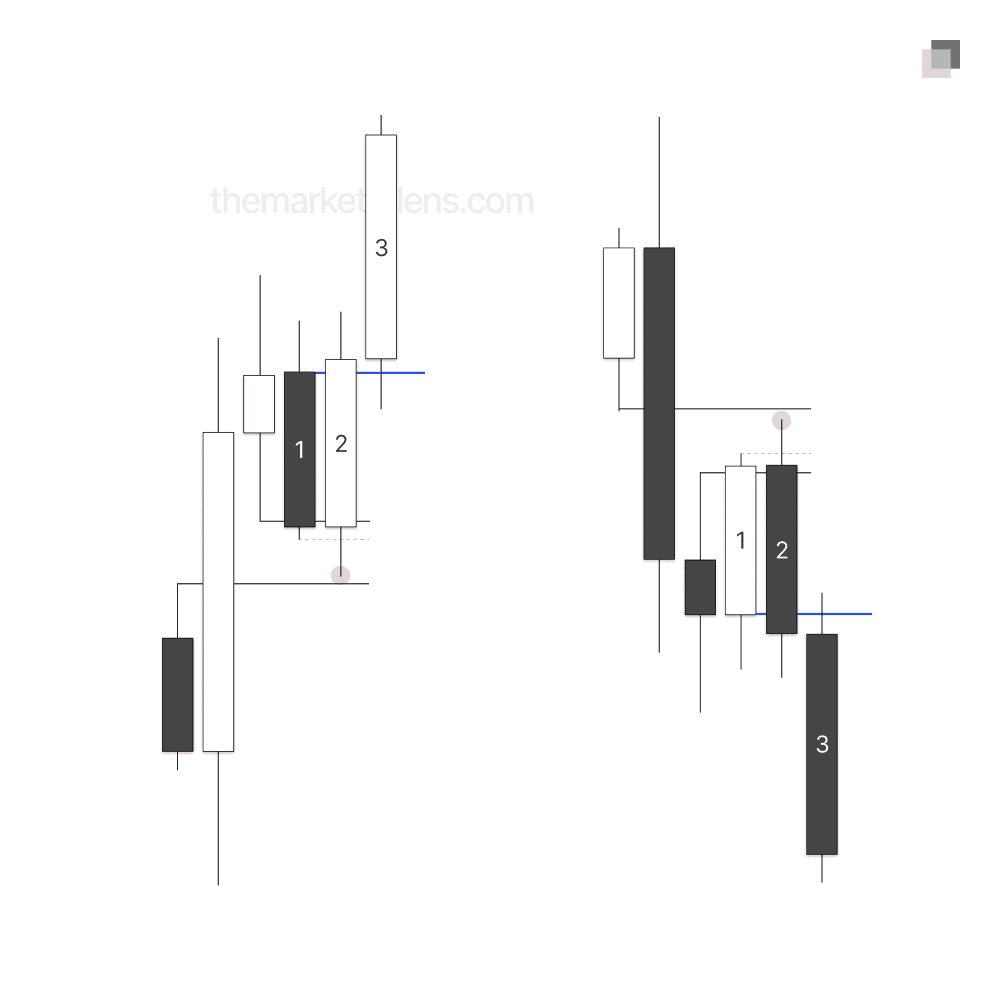
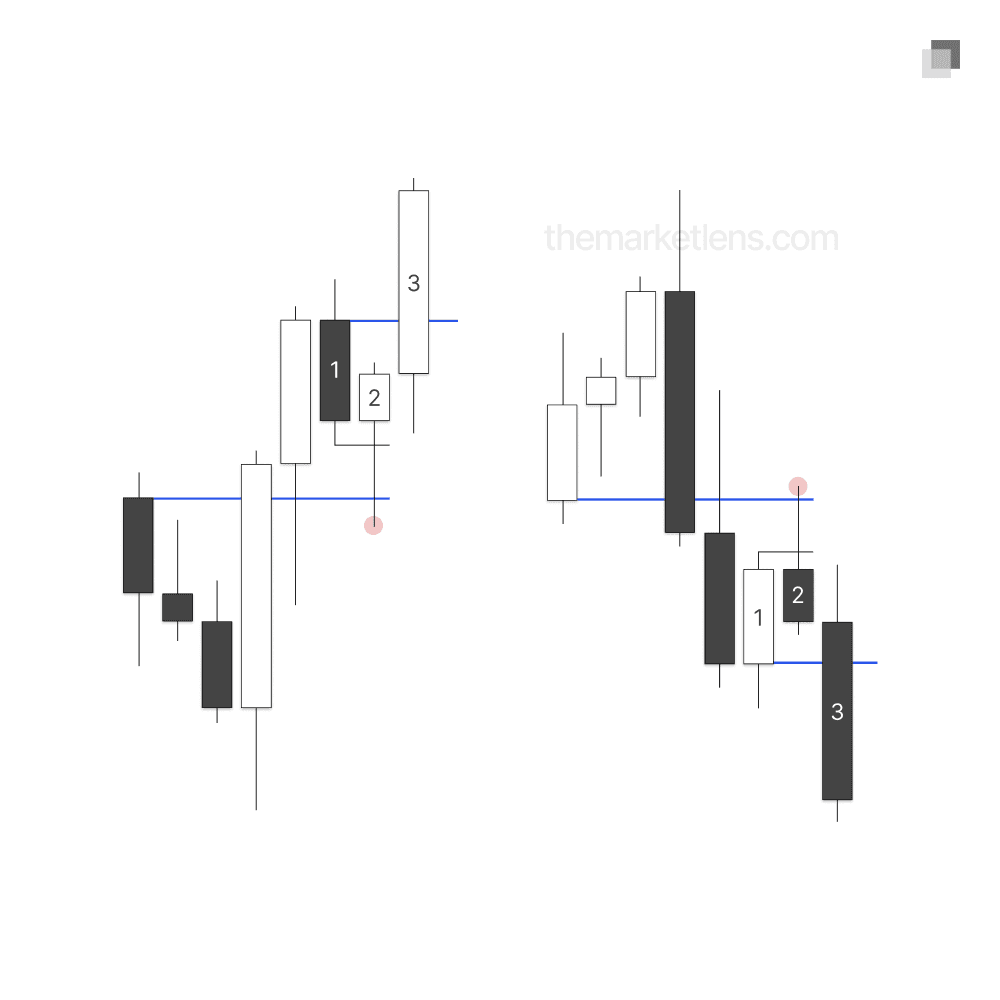
In the example below, a high or low has been identified as the point of interest. Price then forms a candle 2 closure, representing the swing formation, which provides a potential entry on a lower timeframe. Candle 3 subsequently forms a protected swing, completing the sequence and allowing price to continue its trend.
In the example below, a high or low has been identified as the point of interest. Price then forms a candle 2 closure, representing the swing formation, which provides a potential entry on a lower timeframe. Candle 3 subsequently forms a protected swing, completing the sequence and allowing price to continue its trend.
In the example below, a high or low has been identified as the point of interest. Price then forms a candle 2 closure, representing the swing formation, which provides a potential entry on a lower timeframe. Candle 3 subsequently forms a protected swing, completing the sequence and allowing price to continue its trend.
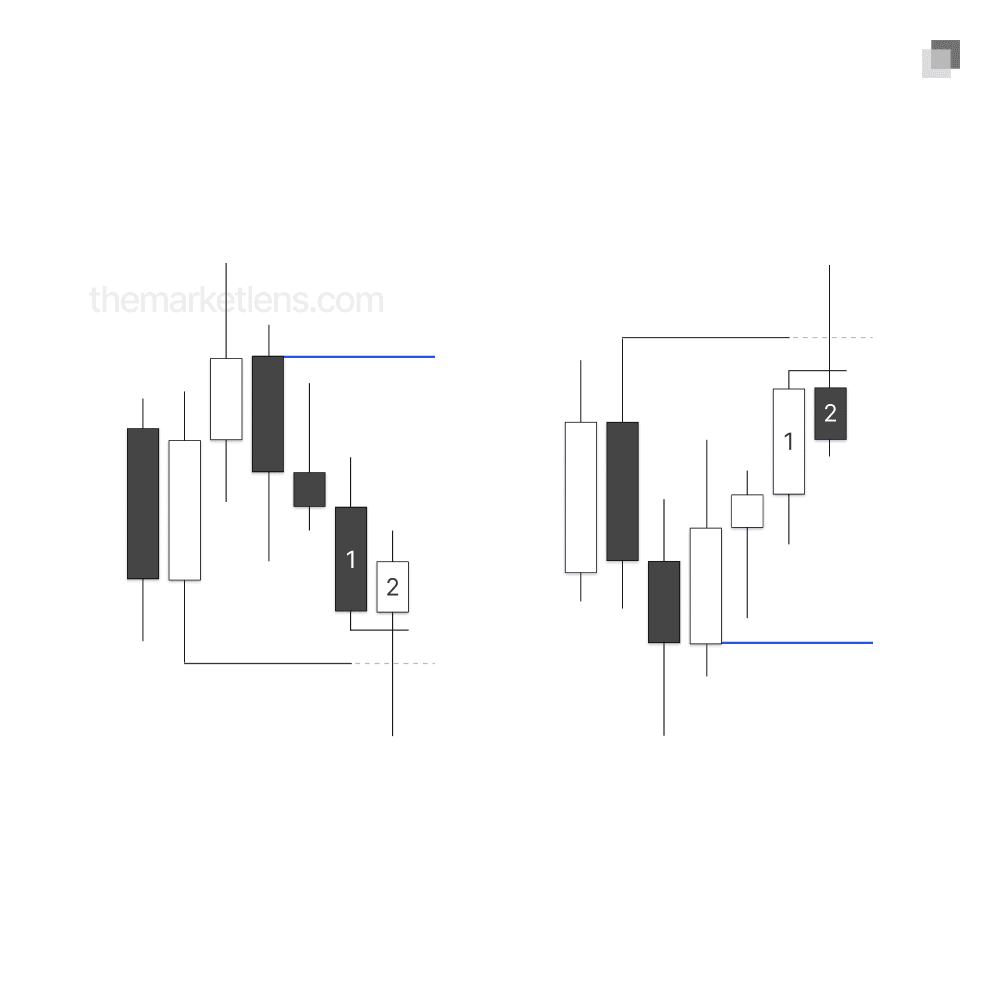
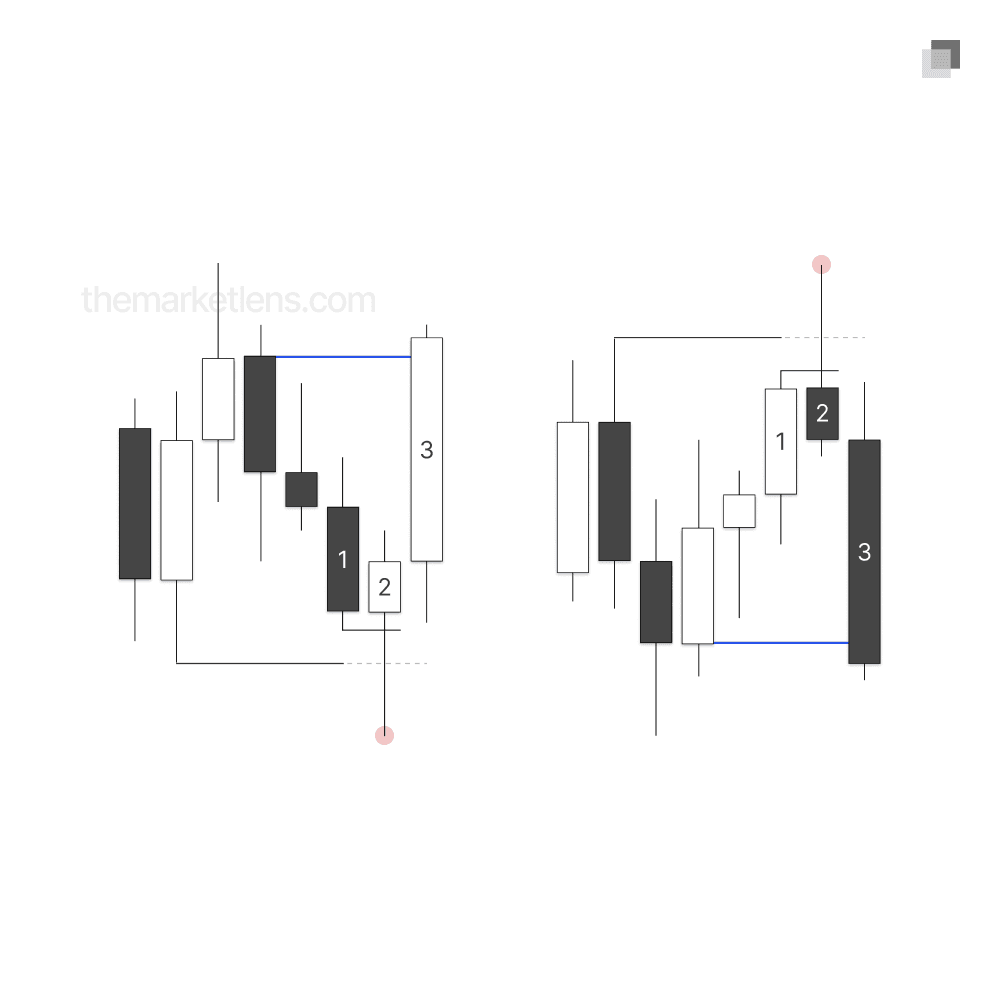
In the example below, the absence of a high, low, or fair value gap from the last protected swing to the current price allows opposing candles to serve as the point of interest. Price then forms a candle 2 closure, representing the swing formation, which provides a potential entry on a lower timeframe. Candle 3 subsequently forms a protected swing, completing the sequence and allowing price to continue its trend.
In the example below, the absence of a high, low, or fair value gap from the last protected swing to the current price allows opposing candles to serve as the point of interest. Price then forms a candle 2 closure, representing the swing formation, which provides a potential entry on a lower timeframe. Candle 3 subsequently forms a protected swing, completing the sequence and allowing price to continue its trend.
In the example below, the absence of a high, low, or fair value gap from the last protected swing to the current price allows opposing candles to serve as the point of interest. Price then forms a candle 2 closure, representing the swing formation, which provides a potential entry on a lower timeframe. Candle 3 subsequently forms a protected swing, completing the sequence and allowing price to continue its trend.

The standard for trading education and guidance
2026 The Market Lens - All Rights Reserved
The standard for trading education and guidance
2026 The Market Lens - All Rights Reserved
The standard for trading education and guidance