


Execution
Execution
Lesson 8 : Scaling Partials
Lesson 8 : Scaling Partials
Lesson 8 : Scaling Partials
Advanced
Advanced
3 min
3 min
Partials
Partials
Partials
Partial profits are not taken prior to 2R, as doing so disrupts the math of the system. This is where the mechanical model incorporates discretionary elements, depending on trade expectations, the broader framework, and current market conditions. Some traders prefer to close 100% of the position at 2R, while others aim to capture more by leaving runners for extended targets. In general, it is best to secure a meaningful portion of the position at 2R rather than allowing the trade to reverse and stop out at breakeven or a loss.
Partial profits are not taken prior to 2R, as doing so disrupts the math of the system. This is where the mechanical model incorporates discretionary elements, depending on trade expectations, the broader framework, and current market conditions. Some traders prefer to close 100% of the position at 2R, while others aim to capture more by leaving runners for extended targets. In general, it is best to secure a meaningful portion of the position at 2R rather than allowing the trade to reverse and stop out at breakeven or a loss.
Partial profits are not taken prior to 2R, as doing so disrupts the math of the system. This is where the mechanical model incorporates discretionary elements, depending on trade expectations, the broader framework, and current market conditions. Some traders prefer to close 100% of the position at 2R, while others aim to capture more by leaving runners for extended targets. In general, it is best to secure a meaningful portion of the position at 2R rather than allowing the trade to reverse and stop out at breakeven or a loss.
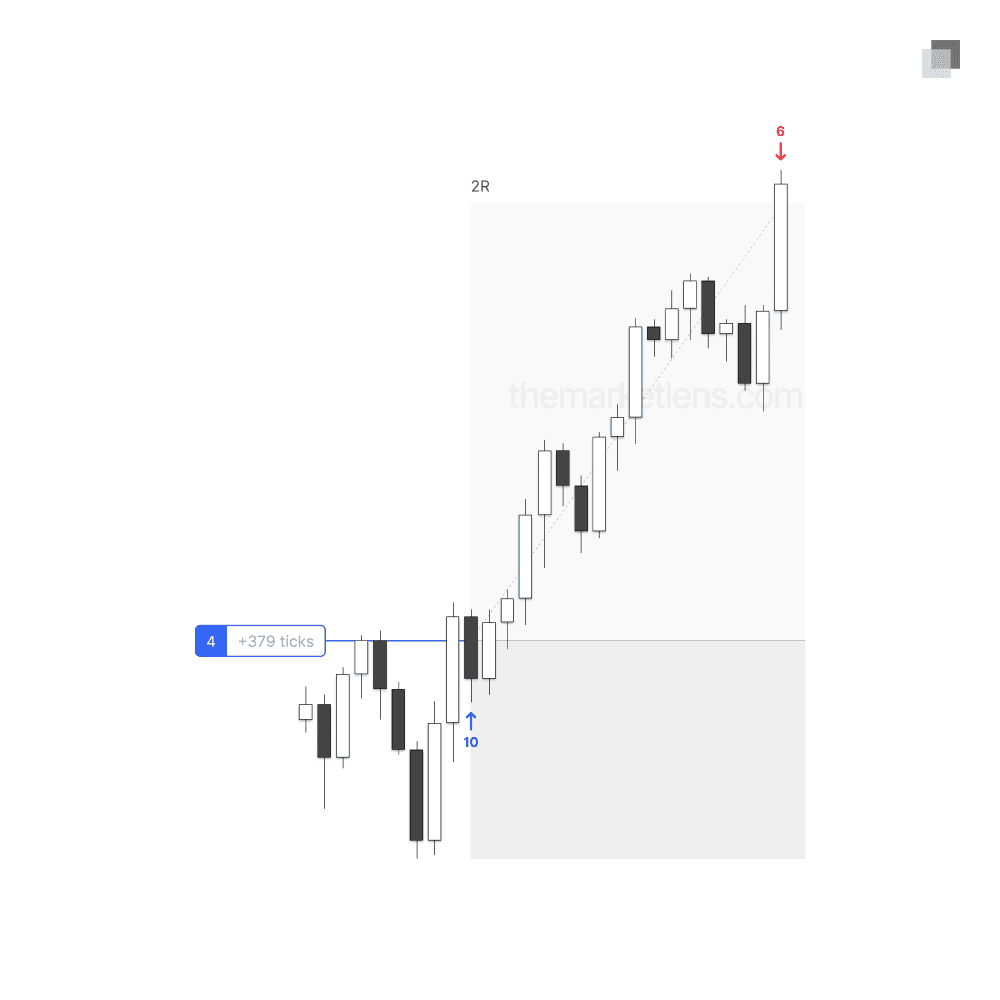
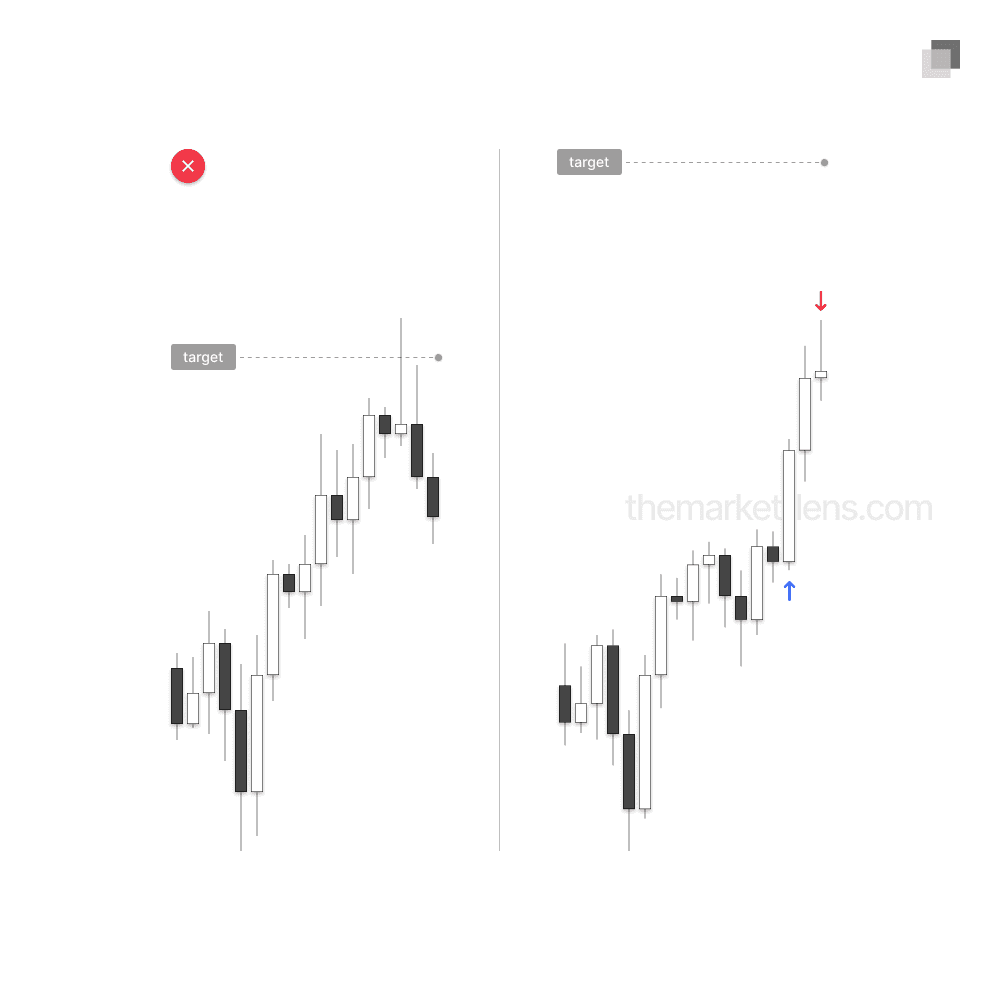
The amount removed from a position will vary depending on expectations and how the market is reacting. When confidence in the framework is high and the market is showing clear willingness to trend, a smaller portion of the position can be secured while allowing the majority to run. In the example shown, the market demonstrates a strong expansion paired with a solid framework, making it reasonable to lock in a small portion of profit while holding the bulk of the trade for extended targets.
The amount removed from a position will vary depending on expectations and how the market is reacting. When confidence in the framework is high and the market is showing clear willingness to trend, a smaller portion of the position can be secured while allowing the majority to run. In the example shown, the market demonstrates a strong expansion paired with a solid framework, making it reasonable to lock in a small portion of profit while holding the bulk of the trade for extended targets.
The amount removed from a position will vary depending on expectations and how the market is reacting. When confidence in the framework is high and the market is showing clear willingness to trend, a smaller portion of the position can be secured while allowing the majority to run. In the example shown, the market demonstrates a strong expansion paired with a solid framework, making it reasonable to lock in a small portion of profit while holding the bulk of the trade for extended targets.
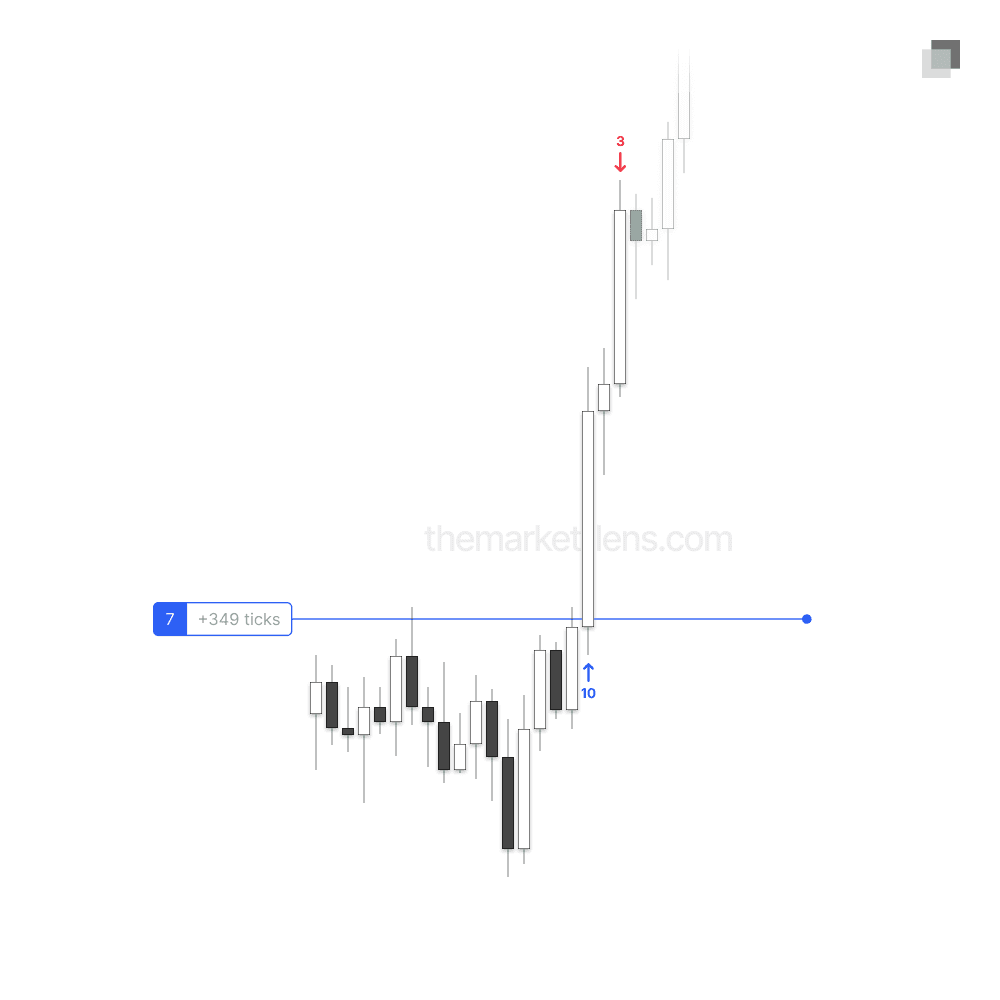
Contrary to the previous example, when the market shows little willingness to expand and price action is lethargic, the best approach is to take the full position off at 2R. In this type of environment, further expansion beyond the targets is unlikely, so securing the entire profit at 2R is the most practical decision.
Contrary to the previous example, when the market shows little willingness to expand and price action is lethargic, the best approach is to take the full position off at 2R. In this type of environment, further expansion beyond the targets is unlikely, so securing the entire profit at 2R is the most practical decision.
Contrary to the previous example, when the market shows little willingness to expand and price action is lethargic, the best approach is to take the full position off at 2R. In this type of environment, further expansion beyond the targets is unlikely, so securing the entire profit at 2R is the most practical decision.
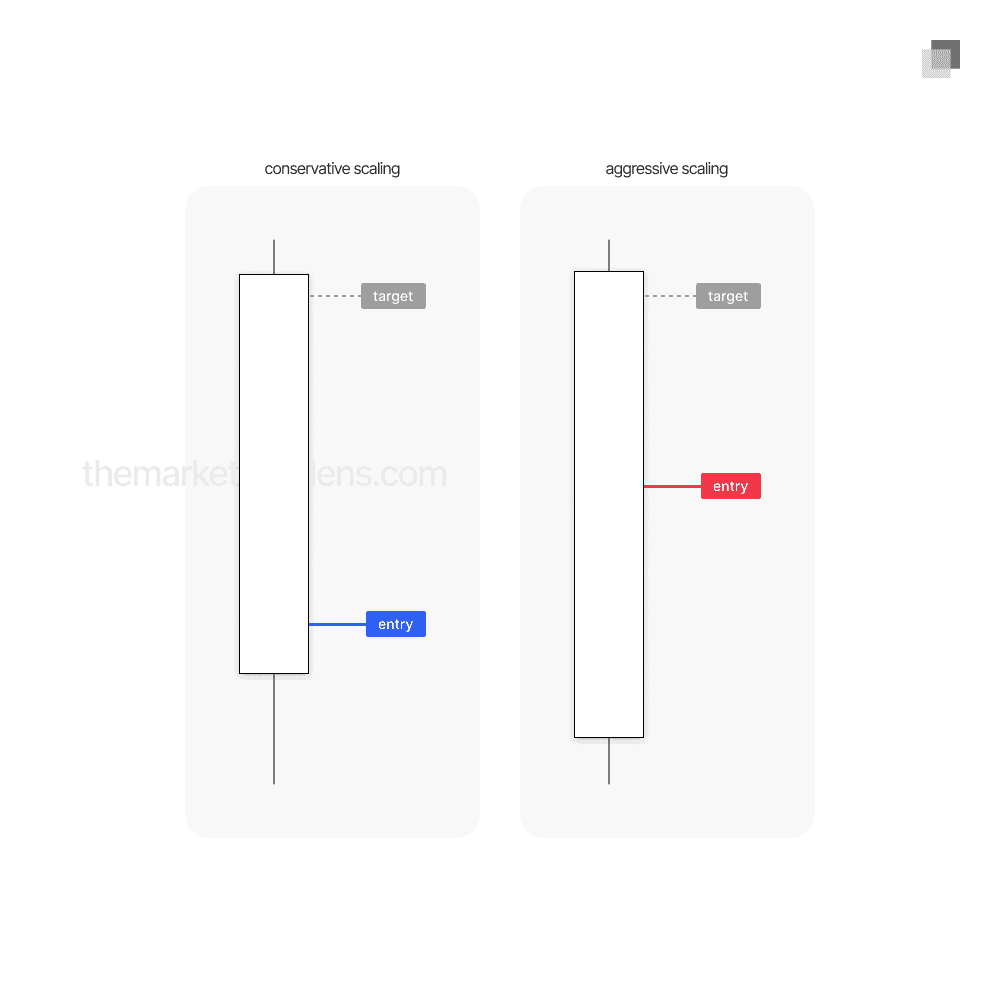
Where price sits within the daily range or higher timeframe candle plays a key role in how position scaling is managed. From the OHLC section, it is clear that expansion candles have small wicks and large bodies. When entering early in the higher timeframe candle and near the opening price, scaling can be more conservative, as further expansion is still expected. However, when entering midway through the expansion, scaling should be more aggressive, since the range is more likely to be nearing exhaustion.
Where price sits within the daily range or higher timeframe candle plays a key role in how position scaling is managed. From the OHLC section, it is clear that expansion candles have small wicks and large bodies. When entering early in the higher timeframe candle and near the opening price, scaling can be more conservative, as further expansion is still expected. However, when entering midway through the expansion, scaling should be more aggressive, since the range is more likely to be nearing exhaustion.
Where price sits within the daily range or higher timeframe candle plays a key role in how position scaling is managed. From the OHLC section, it is clear that expansion candles have small wicks and large bodies. When entering early in the higher timeframe candle and near the opening price, scaling can be more conservative, as further expansion is still expected. However, when entering midway through the expansion, scaling should be more aggressive, since the range is more likely to be nearing exhaustion.
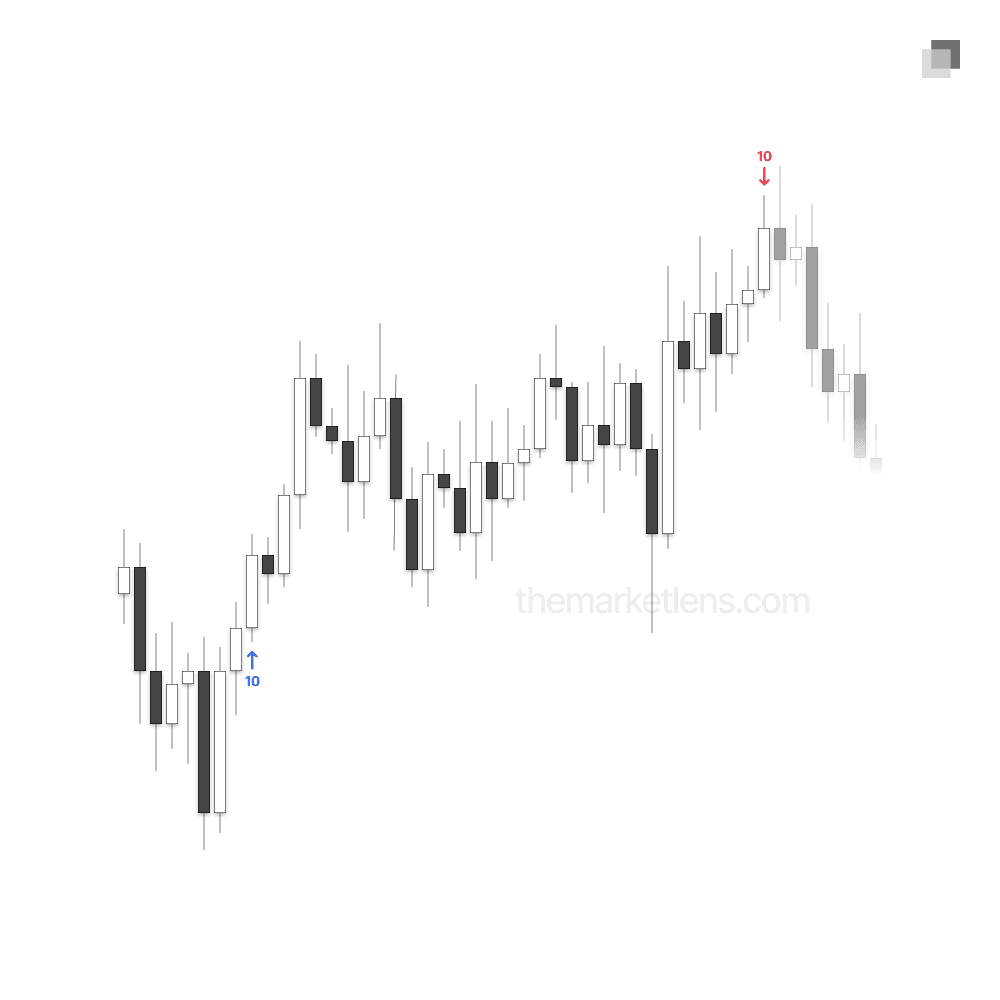
Another factor that influences profit taking is correlated assets. If a correlated asset reaches its target and begins forming a reversal, it can serve as a signal to consider partialing or exiting the position. A reversal in the correlated asset often carries over, increasing the likelihood that the current asset will also reverse.
Another factor that influences profit taking is correlated assets. If a correlated asset reaches its target and begins forming a reversal, it can serve as a signal to consider partialing or exiting the position. A reversal in the correlated asset often carries over, increasing the likelihood that the current asset will also reverse.
Another factor that influences profit taking is correlated assets. If a correlated asset reaches its target and begins forming a reversal, it can serve as a signal to consider partialing or exiting the position. A reversal in the correlated asset often carries over, increasing the likelihood that the current asset will also reverse.

The standard for trading education and guidance
2026 The Market Lens - All Rights Reserved
The standard for trading education and guidance
2026 The Market Lens - All Rights Reserved
The standard for trading education and guidance