


Execution
Execution
Lesson 9 : Trailing Stop Loss
Lesson 9 : Trailing Stop Loss
Lesson 9 : Trailing Stop Loss
Advanced
Advanced
1 min
1 min
Trailing Stop Loss
Trailing Stop Loss
Trailing Stop Loss
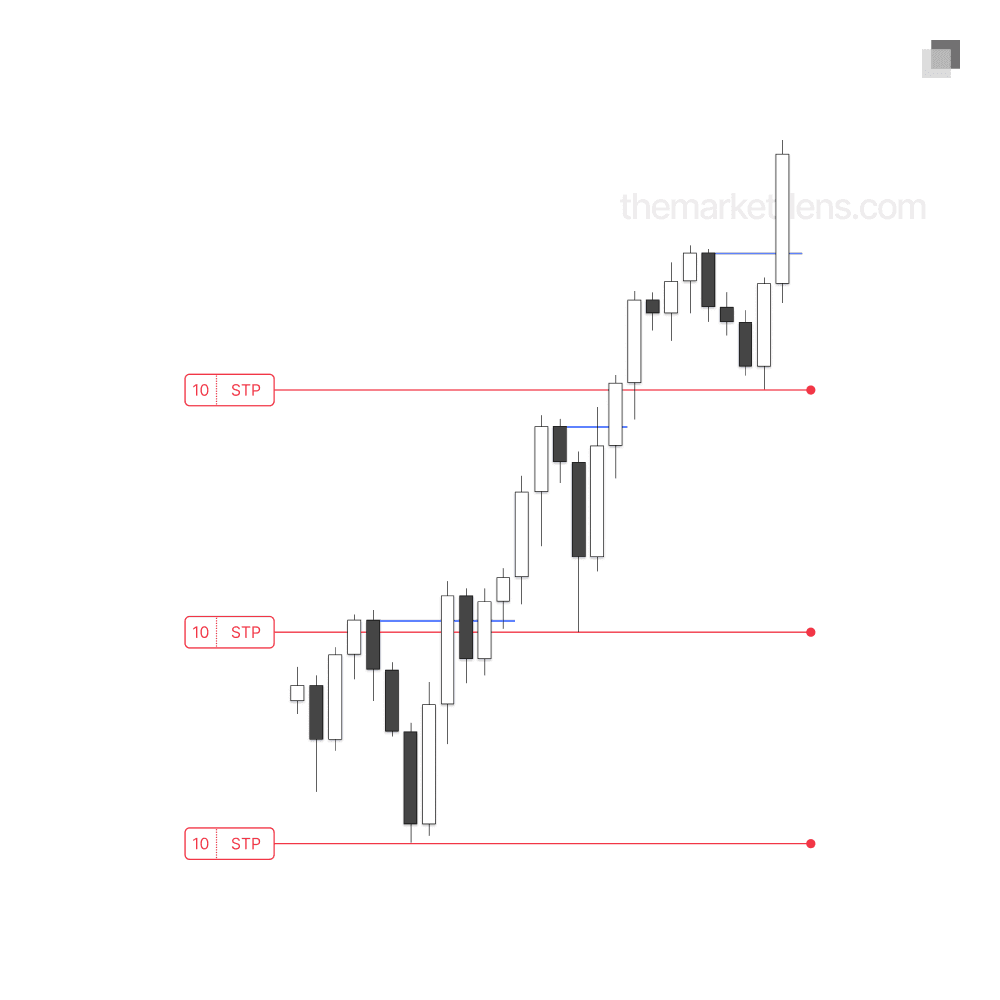
New protected swings that form after an entry present opportunities to trail the position. Trailing is most effective when there is an expectation for price to trend and continue reaching for targets, meaning the trade has room to run. As each new protected low is established, the stop loss can be adjusted to follow, locking in profits while allowing the position to capture further expansion.
New protected swings that form after an entry present opportunities to trail the position. Trailing is most effective when there is an expectation for price to trend and continue reaching for targets, meaning the trade has room to run. As each new protected low is established, the stop loss can be adjusted to follow, locking in profits while allowing the position to capture further expansion.
New protected swings that form after an entry present opportunities to trail the position. Trailing is most effective when there is an expectation for price to trend and continue reaching for targets, meaning the trade has room to run. As each new protected low is established, the stop loss can be adjusted to follow, locking in profits while allowing the position to capture further expansion.
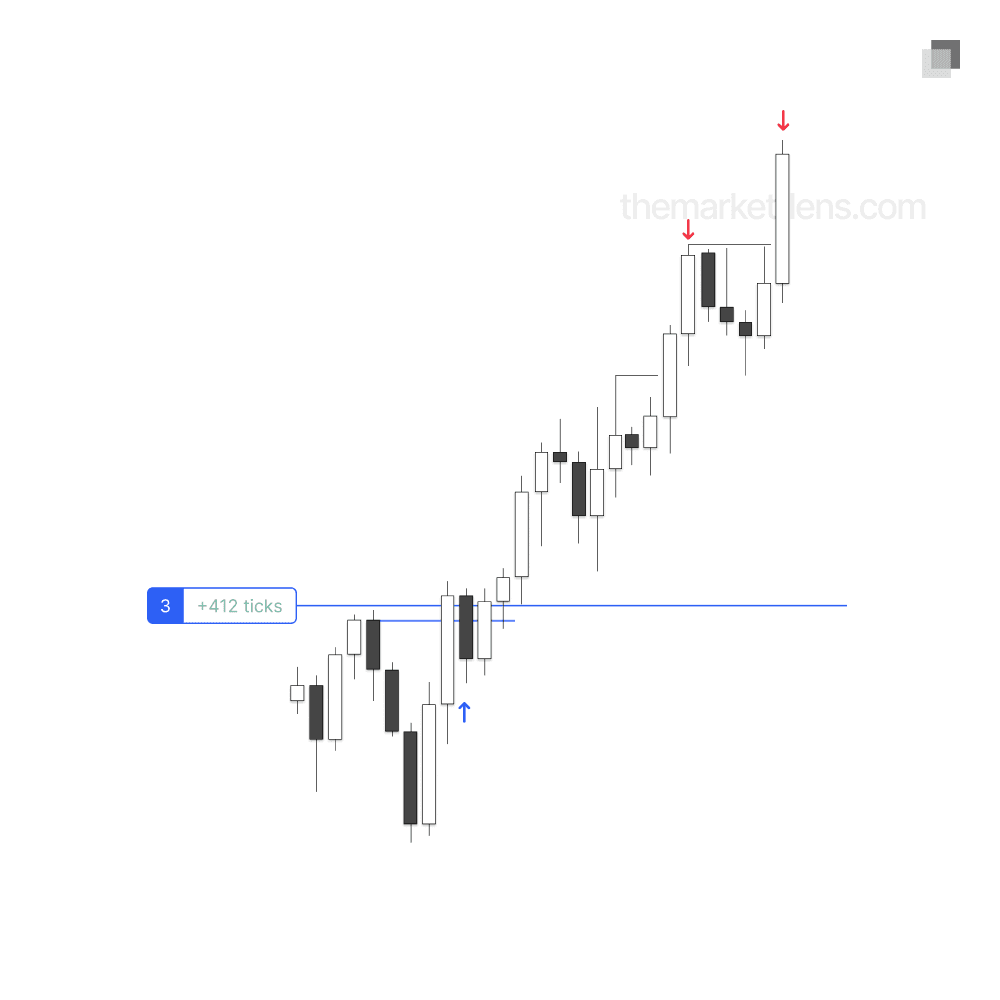
When price is not expanding as anticipated or has already moved beyond the intended targets, this is where partialing out into strength becomes more practical than trailing the position. Partial exits are best taken around highs and lows, as these areas are more likely to trigger reversals. This approach secures profits while reducing exposure in conditions where continuation is less likely.
When price is not expanding as anticipated or has already moved beyond the intended targets, this is where partialing out into strength becomes more practical than trailing the position. Partial exits are best taken around highs and lows, as these areas are more likely to trigger reversals. This approach secures profits while reducing exposure in conditions where continuation is less likely.
When price is not expanding as anticipated or has already moved beyond the intended targets, this is where partialing out into strength becomes more practical than trailing the position. Partial exits are best taken around highs and lows, as these areas are more likely to trigger reversals. This approach secures profits while reducing exposure in conditions where continuation is less likely.

The standard for trading education and guidance
2026 The Market Lens - All Rights Reserved
The standard for trading education and guidance
2026 The Market Lens - All Rights Reserved
The standard for trading education and guidance