


Management
Management
Lesson 10 : Trailing Stop
Lesson 10 : Trailing Stop
Lesson 10 : Trailing Stop
Advanced
Advanced
8 min
8 min
Core Idea
Trade management begins the moment a position enters the market. The initial idea sets the stage to maximize probability, but the decisions made throughout the trade determine the final outcome. The objective is always to minimize damage on losses while maximizing profit on wins.
Trade management begins the moment a position enters the market. The initial idea sets the stage to maximize probability, but the decisions made throughout the trade determine the final outcome. The objective is always to minimize damage on losses while maximizing profit on wins.
Trade management begins the moment a position enters the market. The initial idea sets the stage to maximize probability, but the decisions made throughout the trade determine the final outcome. The objective is always to minimize damage on losses while maximizing profit on wins.
Previously, a static form of trade management with fixed protocols was established. That approach served to prevent premature adjustments to the stop loss and allowed trades to fully play out. At this stage, more dynamic management can be introduced, adapting decisions based on specific market conditions.
Previously, a static form of trade management with fixed protocols was established. That approach served to prevent premature adjustments to the stop loss and allowed trades to fully play out. At this stage, more dynamic management can be introduced, adapting decisions based on specific market conditions.
Previously, a static form of trade management with fixed protocols was established. That approach served to prevent premature adjustments to the stop loss and allowed trades to fully play out. At this stage, more dynamic management can be introduced, adapting decisions based on specific market conditions.
While additional details may be involved, the core principle of stop loss management remains the same. The goal is to secure a minimum of 2R on winning trades. To achieve this, avoid making premature adjustments before the market has broken in your favor to at least that risk-to-reward threshold when the conditions are favorable.
While additional details may be involved, the core principle of stop loss management remains the same. The goal is to secure a minimum of 2R on winning trades. To achieve this, avoid making premature adjustments before the market has broken in your favor to at least that risk-to-reward threshold when the conditions are favorable.
While additional details may be involved, the core principle of stop loss management remains the same. The goal is to secure a minimum of 2R on winning trades. To achieve this, avoid making premature adjustments before the market has broken in your favor to at least that risk-to-reward threshold when the conditions are favorable.
Protective Stop Loss Trailing
Protective Stop Loss Trailing
Protective Stop Loss Trailing
Some trades will inevitably fall flat after entry. Price may hover around the entry point for an extended period or make shallow attempts in the intended direction before reversing. Expansion markets should trade with speed and intent, so when this behavior is absent it can signal the need for more aggressive management to protect risk on a position that has lost quality and probability.
Some trades will inevitably fall flat after entry. Price may hover around the entry point for an extended period or make shallow attempts in the intended direction before reversing. Expansion markets should trade with speed and intent, so when this behavior is absent it can signal the need for more aggressive management to protect risk on a position that has lost quality and probability.
Some trades will inevitably fall flat after entry. Price may hover around the entry point for an extended period or make shallow attempts in the intended direction before reversing. Expansion markets should trade with speed and intent, so when this behavior is absent it can signal the need for more aggressive management to protect risk on a position that has lost quality and probability.
These are advanced concepts that require real experience managing trades under this model. Without clear confidence and proven skill, attempting them will only damage trade management and create unnecessary errors. They are uncommon scenarios, not a main focus, and should only be applied in the most obvious poor conditions. Any attempt to overuse them will lead to micro-management and premature exits from trades that remain valid in the market.
These are advanced concepts that require real experience managing trades under this model. Without clear confidence and proven skill, attempting them will only damage trade management and create unnecessary errors. They are uncommon scenarios, not a main focus, and should only be applied in the most obvious poor conditions. Any attempt to overuse them will lead to micro-management and premature exits from trades that remain valid in the market.
These are advanced concepts that require real experience managing trades under this model. Without clear confidence and proven skill, attempting them will only damage trade management and create unnecessary errors. They are uncommon scenarios, not a main focus, and should only be applied in the most obvious poor conditions. Any attempt to overuse them will lead to micro-management and premature exits from trades that remain valid in the market.
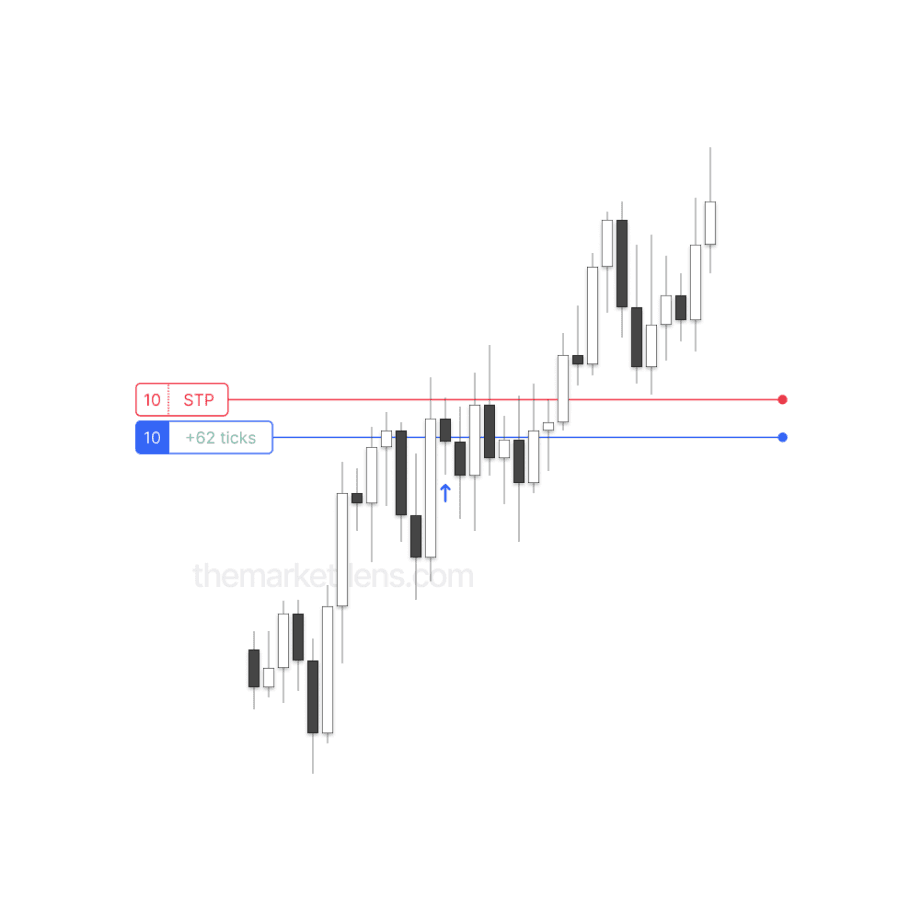
When the market breaks in the intended direction under conditions that have begun to show unfavorable signs, risk can be reduced by trailing the stop loss toward or beyond the position average. The preferred approach is to trail the stop to a newly established invalidation point formed during the move. This ensures the stop is aligned with a level the market has already shown respect for, while still allowing the idea to play out if momentum continues.
When the market breaks in the intended direction under conditions that have begun to show unfavorable signs, risk can be reduced by trailing the stop loss toward or beyond the position average. The preferred approach is to trail the stop to a newly established invalidation point formed during the move. This ensures the stop is aligned with a level the market has already shown respect for, while still allowing the idea to play out if momentum continues.
When the market breaks in the intended direction under conditions that have begun to show unfavorable signs, risk can be reduced by trailing the stop loss toward or beyond the position average. The preferred approach is to trail the stop to a newly established invalidation point formed during the move. This ensures the stop is aligned with a level the market has already shown respect for, while still allowing the idea to play out if momentum continues.
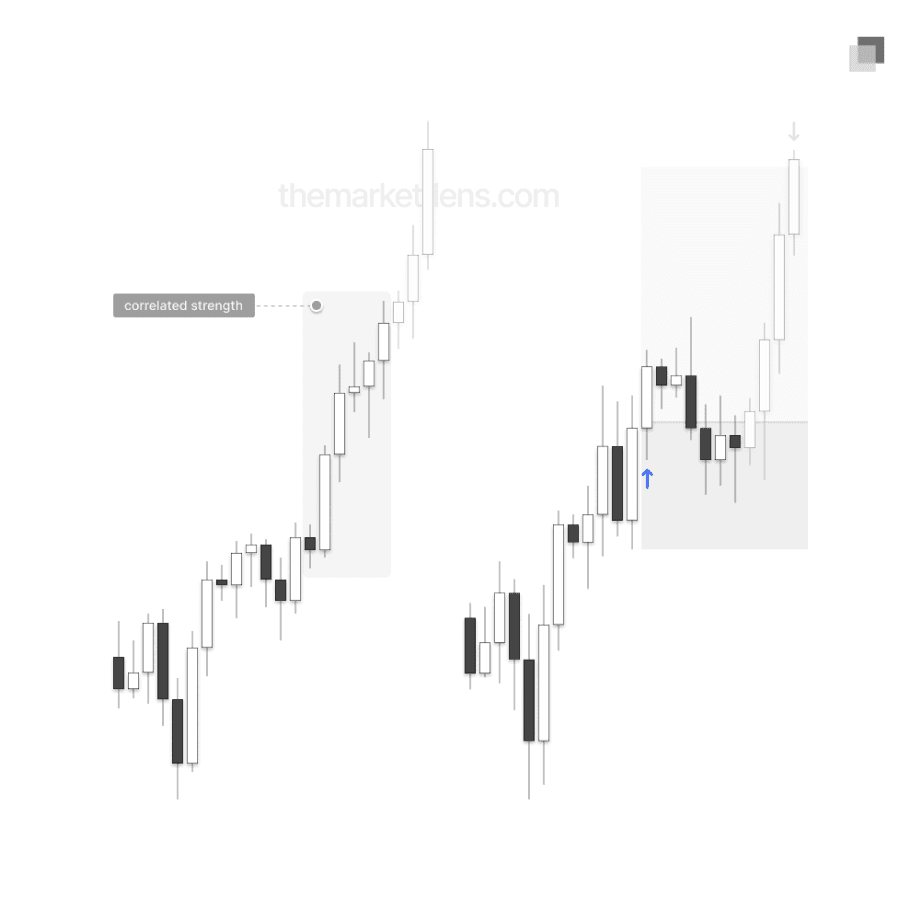
When considering this decision, remain aware of how correlated pairs are trading. At times you may be caught in the lagging market while another pair is delivering the move you were anticipating. In such cases, the proper response may be to exercise additional patience and allow the asset you are positioned on to catch up, rather than prematurely assuming the idea is invalidated.
When considering this decision, remain aware of how correlated pairs are trading. At times you may be caught in the lagging market while another pair is delivering the move you were anticipating. In such cases, the proper response may be to exercise additional patience and allow the asset you are positioned on to catch up, rather than prematurely assuming the idea is invalidated.
When considering this decision, remain aware of how correlated pairs are trading. At times you may be caught in the lagging market while another pair is delivering the move you were anticipating. In such cases, the proper response may be to exercise additional patience and allow the asset you are positioned on to catch up, rather than prematurely assuming the idea is invalidated.
Full position closes are far less common and should only occur under two conditions.
Full position closes are far less common and should only occur under two conditions.
Full position closes are far less common and should only occur under two conditions.
The first is when the trade was opened on an idea that is not aligned with the process, in which case the position should be closed because probability was never in favor to begin with.
The first is when the trade was opened on an idea that is not aligned with the process, in which case the position should be closed because probability was never in favor to begin with.
The first is when the trade was opened on an idea that is not aligned with the process, in which case the position should be closed because probability was never in favor to begin with.
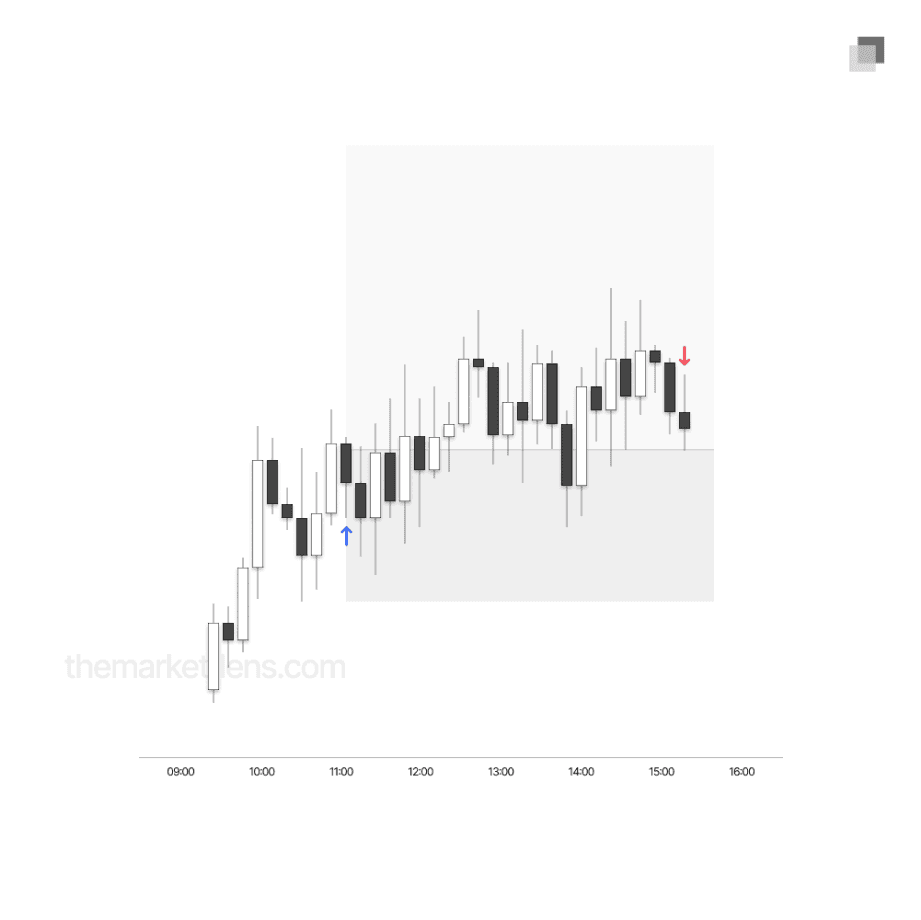
The second condition is when price holds a range between the stop loss and profit target for an extended period, either for several hours or into the close of the trading day. In this case, the position should be flattened rather than taking on the mental strain of holding through stagnant conditions or carrying the trade forward into the next day.
The second condition is when price holds a range between the stop loss and profit target for an extended period, either for several hours or into the close of the trading day. In this case, the position should be flattened rather than taking on the mental strain of holding through stagnant conditions or carrying the trade forward into the next day.
The second condition is when price holds a range between the stop loss and profit target for an extended period, either for several hours or into the close of the trading day. In this case, the position should be flattened rather than taking on the mental strain of holding through stagnant conditions or carrying the trade forward into the next day.
Trailing in Expansions
There will be scenarios where the market expands aggressively in your favor without forming opposing candles that allow for an objective stop loss trail. In these situations, two approaches can be applied:.
There will be scenarios where the market expands aggressively in your favor without forming opposing candles that allow for an objective stop loss trail. In these situations, two approaches can be applied:.
There will be scenarios where the market expands aggressively in your favor without forming opposing candles that allow for an objective stop loss trail. In these situations, two approaches can be applied:.
Favor scaling the position over trailing the stop loss.
Favor scaling the position over trailing the stop loss.
Favor scaling the position over trailing the stop loss.
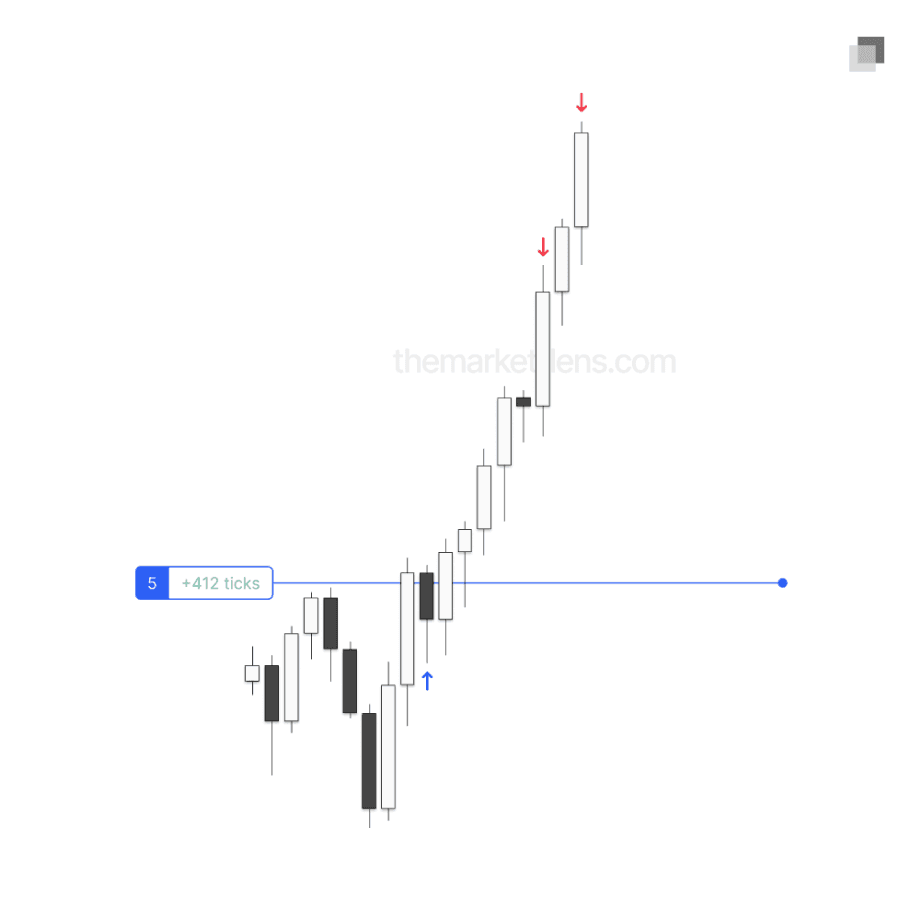
When price moves aggressively into strength (for longs) or weakness (for shorts), it often signals a favorable area to secure profits. Closing partial size into momentum is preferable to being stopped out for less. The degree to scale depends on position size: the more of the original size still on, the more justification there is to secure profits; the less remaining, the more room there is to hold.
When price moves aggressively into strength (for longs) or weakness (for shorts), it often signals a favorable area to secure profits. Closing partial size into momentum is preferable to being stopped out for less. The degree to scale depends on position size: the more of the original size still on, the more justification there is to secure profits; the less remaining, the more room there is to hold.
When price moves aggressively into strength (for longs) or weakness (for shorts), it often signals a favorable area to secure profits. Closing partial size into momentum is preferable to being stopped out for less. The degree to scale depends on position size: the more of the original size still on, the more justification there is to secure profits; the less remaining, the more room there is to hold.
Trail stop loss in relation to risk-to-reward.
Trail stop loss in relation to risk-to-reward.
Trail stop loss in relation to risk-to-reward.
If the intention is to hold the position longer, the stop should trail according to risk-to-reward rather than arbitrary levels. This is only valid when a clear objective remains unreached during the expansion. Measure distance from current price to target and decide what portion of open profit you are willing to risk for the chance of completion. Ideally, the adjusted stop still preserves a positive risk-to-reward profile. The aim is to balance protection of the position with enough room for the market to either create a new invalidation level to trail to, or to reach the objective outright.
If the intention is to hold the position longer, the stop should trail according to risk-to-reward rather than arbitrary levels. This is only valid when a clear objective remains unreached during the expansion. Measure distance from current price to target and decide what portion of open profit you are willing to risk for the chance of completion. Ideally, the adjusted stop still preserves a positive risk-to-reward profile. The aim is to balance protection of the position with enough room for the market to either create a new invalidation level to trail to, or to reach the objective outright.
If the intention is to hold the position longer, the stop should trail according to risk-to-reward rather than arbitrary levels. This is only valid when a clear objective remains unreached during the expansion. Measure distance from current price to target and decide what portion of open profit you are willing to risk for the chance of completion. Ideally, the adjusted stop still preserves a positive risk-to-reward profile. The aim is to balance protection of the position with enough room for the market to either create a new invalidation level to trail to, or to reach the objective outright.
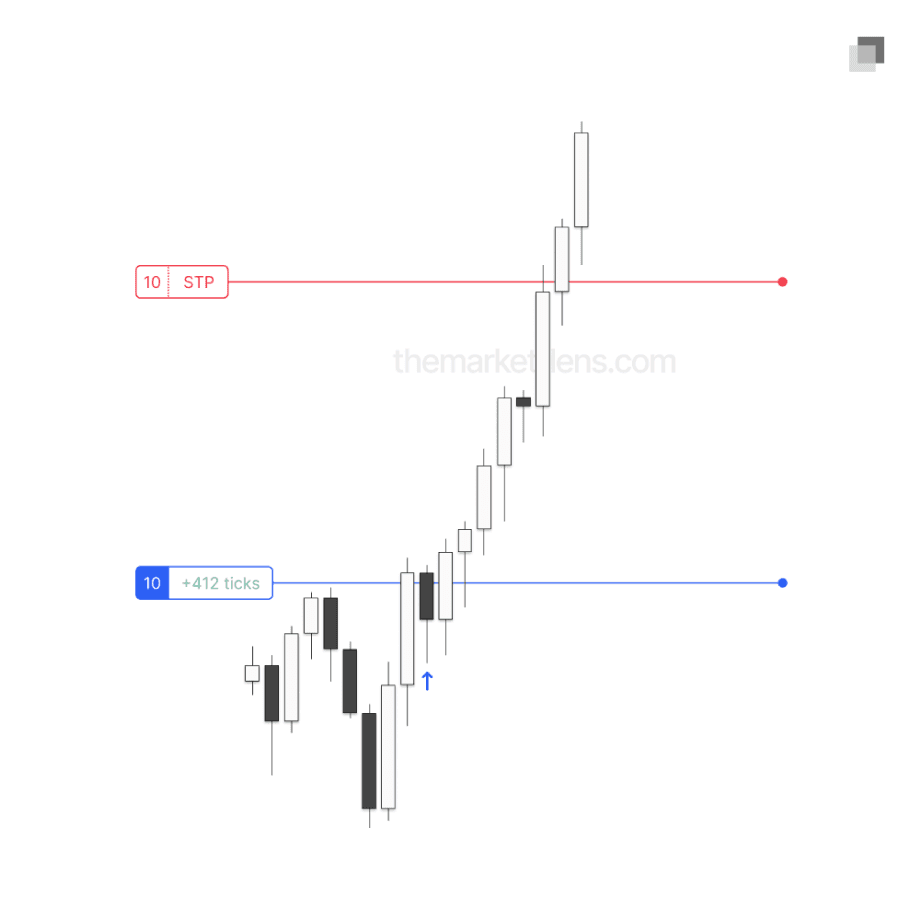
Your decision within this framework should also be informed by the same considerations applied when scaling positions.
Your decision within this framework should also be informed by the same considerations applied when scaling positions.
Your decision within this framework should also be informed by the same considerations applied when scaling positions.

The standard for trading education and guidance
2026 The Market Lens - All Rights Reserved
The standard for trading education and guidance
2026 The Market Lens - All Rights Reserved
The standard for trading education and guidance