


SMT
SMT
Lesson 12 : Swing Confirmations
Lesson 12 : Swing Confirmations
Lesson 12 : Swing Confirmations
Advanced
Advanced
2 min
2 min
Swing Confirmations
Swing Confirmations
Swing Confirmations
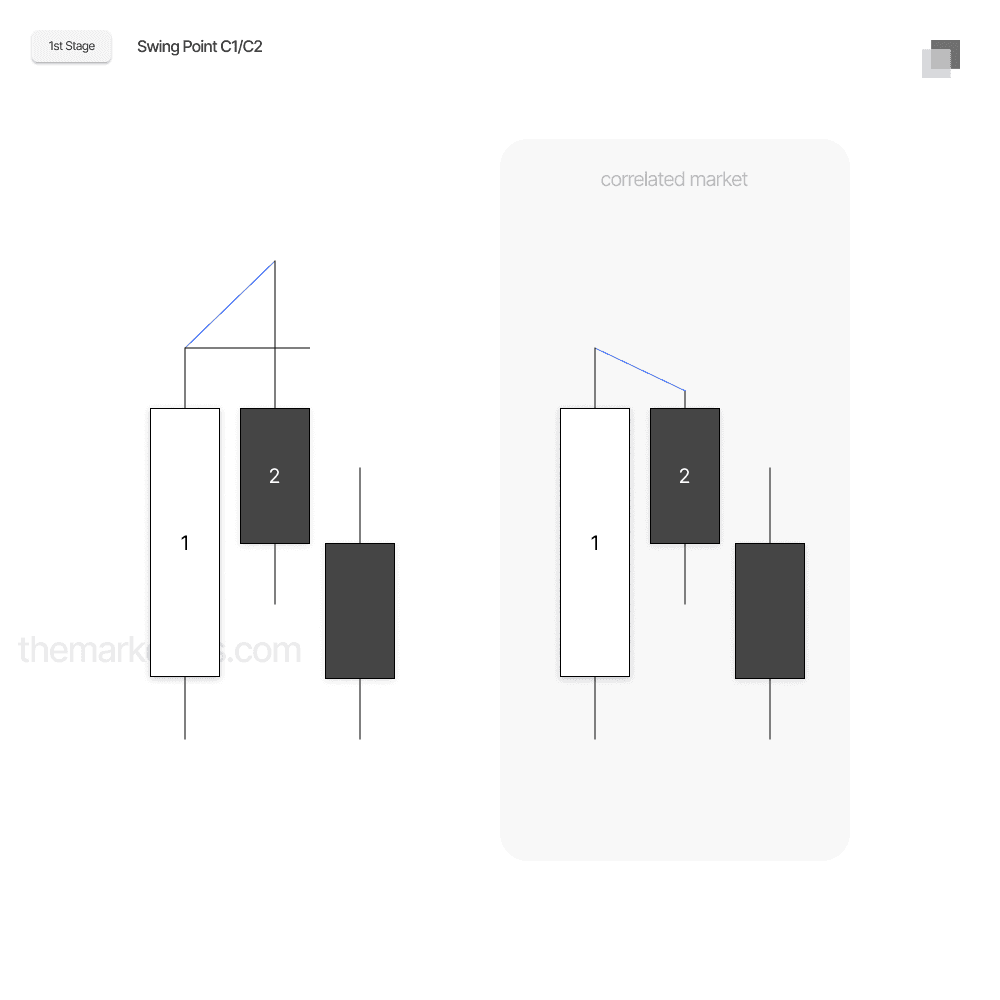
SMT occurs when there is SMT between candle 1 and candle 2 on the higher timeframe, and the correlated asset fails to take out the high of candle 1.
SMT occurs when there is SMT between candle 1 and candle 2 on the higher timeframe, and the correlated asset fails to take out the high of candle 1.
SMT occurs when there is SMT between candle 1 and candle 2 on the higher timeframe, and the correlated asset fails to take out the high of candle 1.
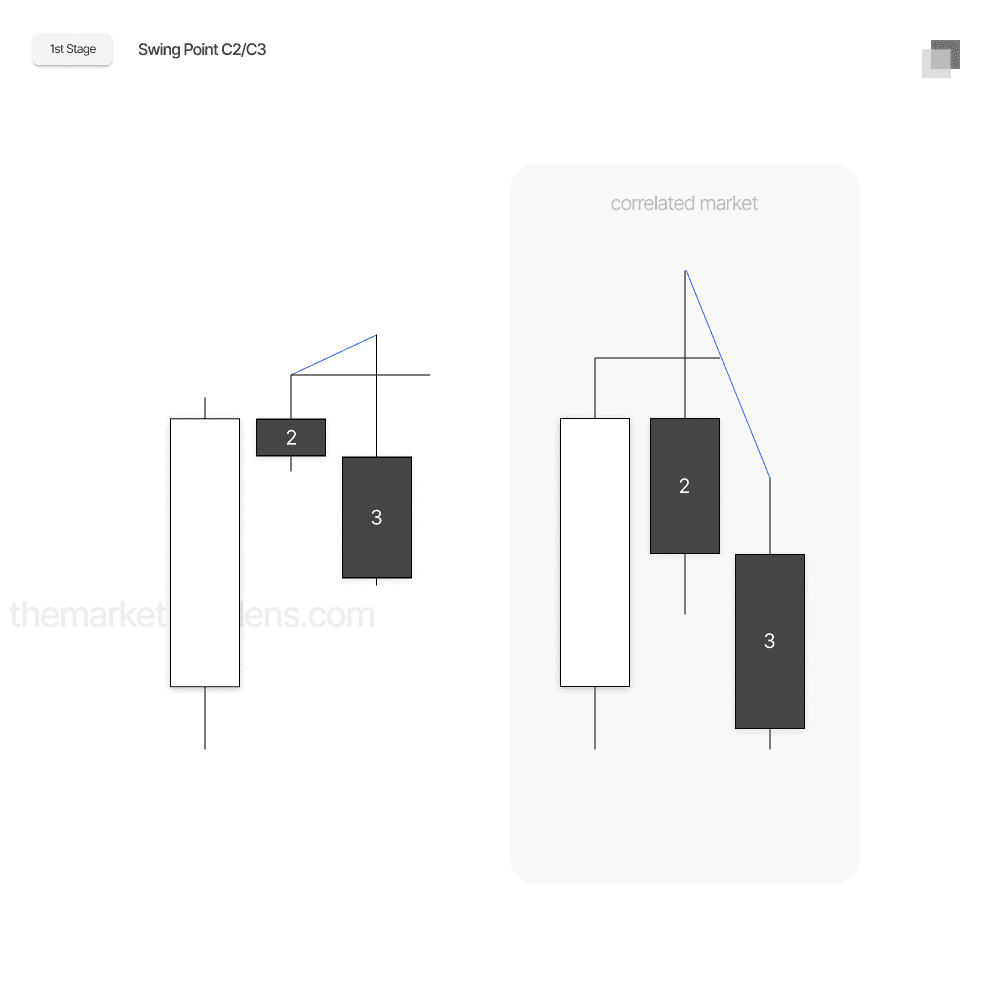
SMT occurs when there is SMT between candle 2 and candle 3 on the higher timeframe, and the correlated asset fails to take out the high of candle 2.
SMT occurs when there is SMT between candle 2 and candle 3 on the higher timeframe, and the correlated asset fails to take out the high of candle 2.
SMT occurs when there is SMT between candle 2 and candle 3 on the higher timeframe, and the correlated asset fails to take out the high of candle 2.
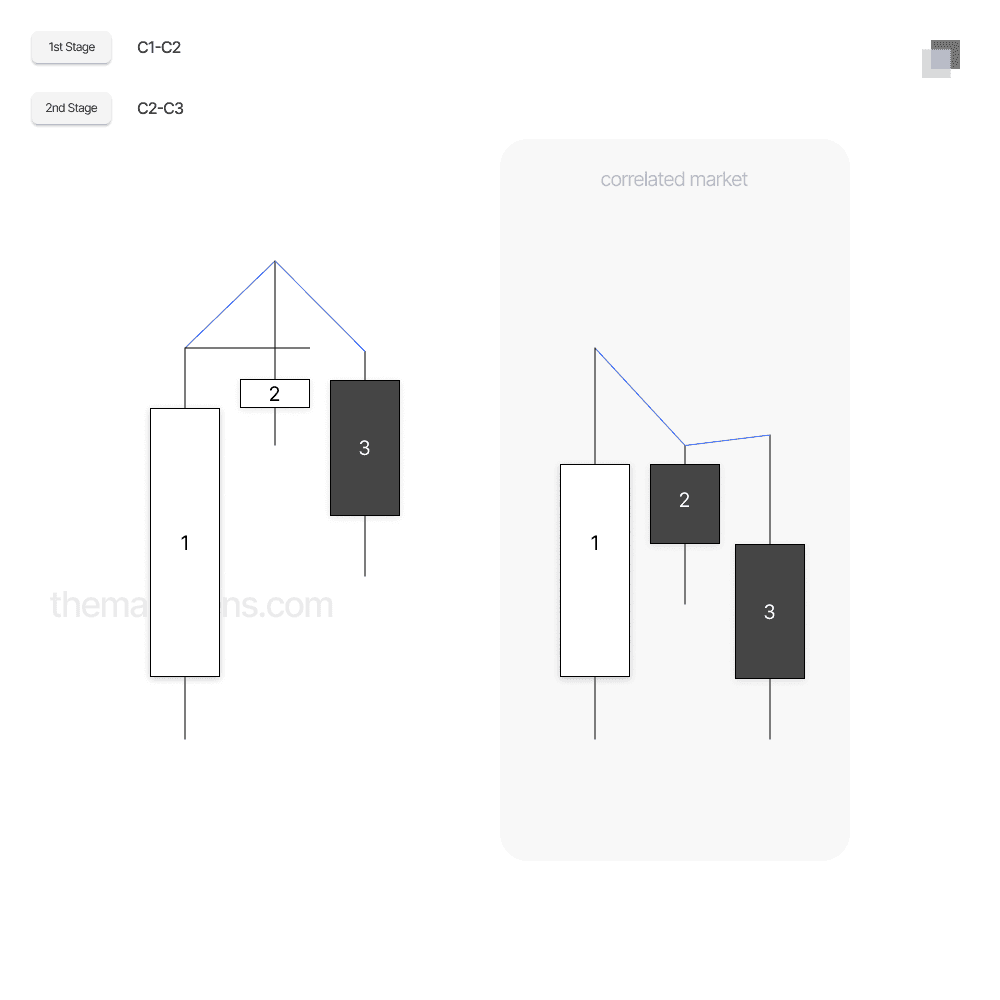
SMT occurs when there is a divergence between Candle 1 and Candle 2 on the higher timeframe, followed by another divergence between Candle 2 and Candle 3, creating a two-stage SMT within the swing formation.
SMT occurs when there is a divergence between Candle 1 and Candle 2 on the higher timeframe, followed by another divergence between Candle 2 and Candle 3, creating a two-stage SMT within the swing formation.
SMT occurs when there is a divergence between Candle 1 and Candle 2 on the higher timeframe, followed by another divergence between Candle 2 and Candle 3, creating a two-stage SMT within the swing formation.
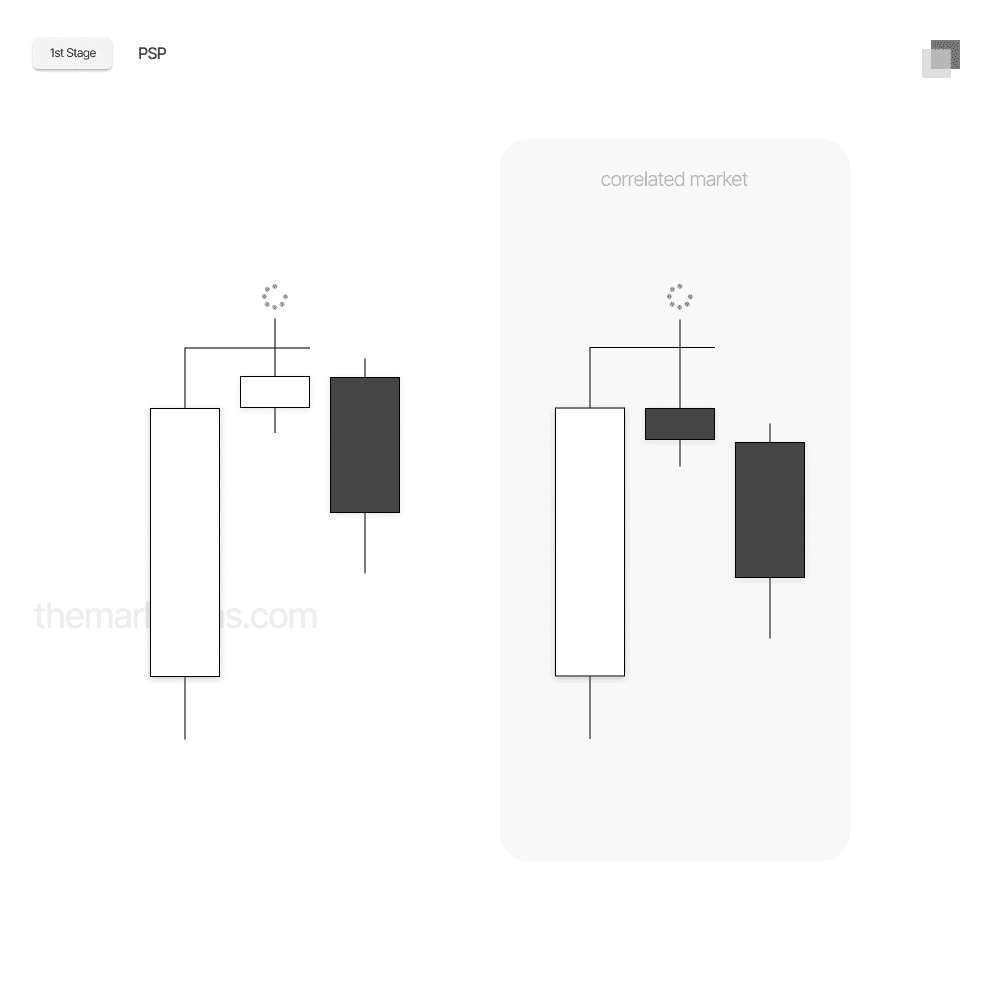
A Precision Swing Point (PSP) occurs when two or more correlated markets show a difference in candle closures. This is a form of divergence and can signal a potential reversal.
A Precision Swing Point (PSP) occurs when two or more correlated markets show a difference in candle closures. This is a form of divergence and can signal a potential reversal.
A Precision Swing Point (PSP) occurs when two or more correlated markets show a difference in candle closures. This is a form of divergence and can signal a potential reversal.
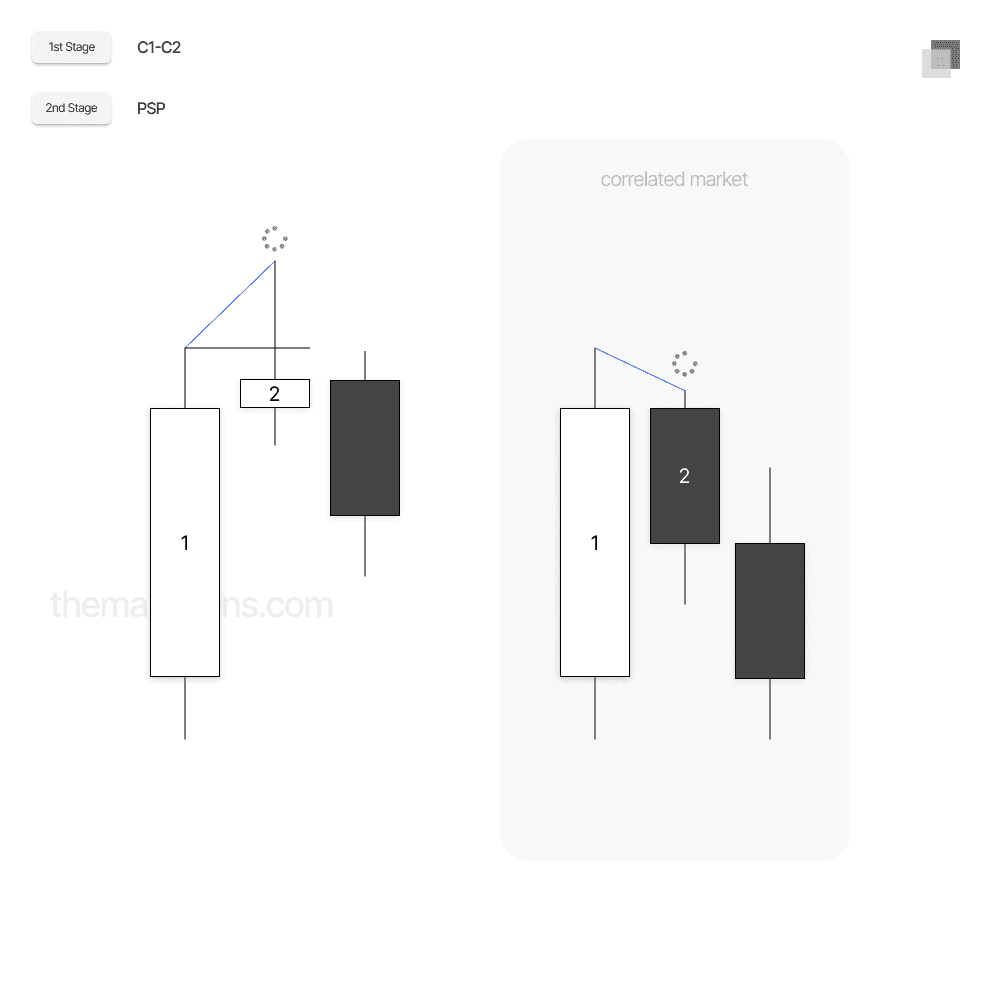
Candle 1 and Candle 2 SMT is confirmed by a PSP, forming a two-stage SMT.
Candle 1 and Candle 2 SMT is confirmed by a PSP, forming a two-stage SMT.
Candle 1 and Candle 2 SMT is confirmed by a PSP, forming a two-stage SMT.
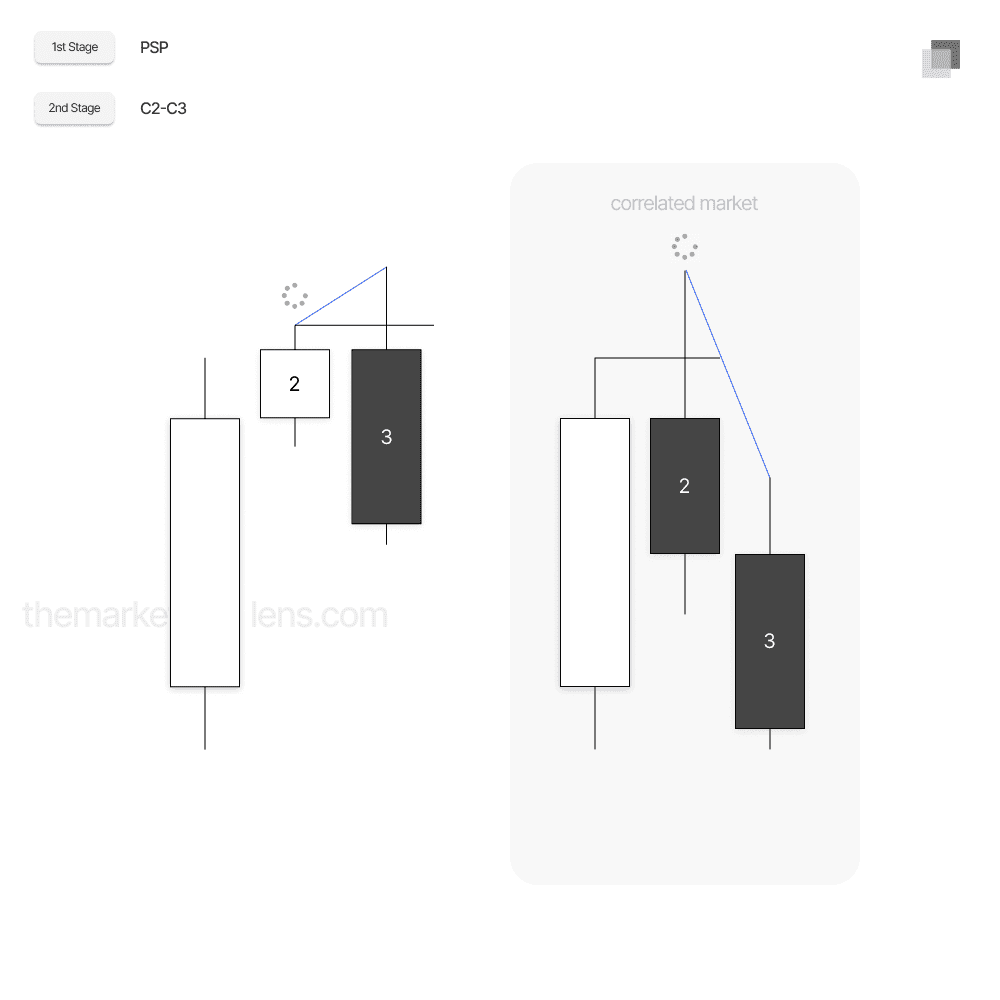
A PSP is confirmed by an SMT between candle 2 and candle 3, forming a two-stage SMT.
A PSP is confirmed by an SMT between candle 2 and candle 3, forming a two-stage SMT.
A PSP is confirmed by an SMT between candle 2 and candle 3, forming a two-stage SMT.
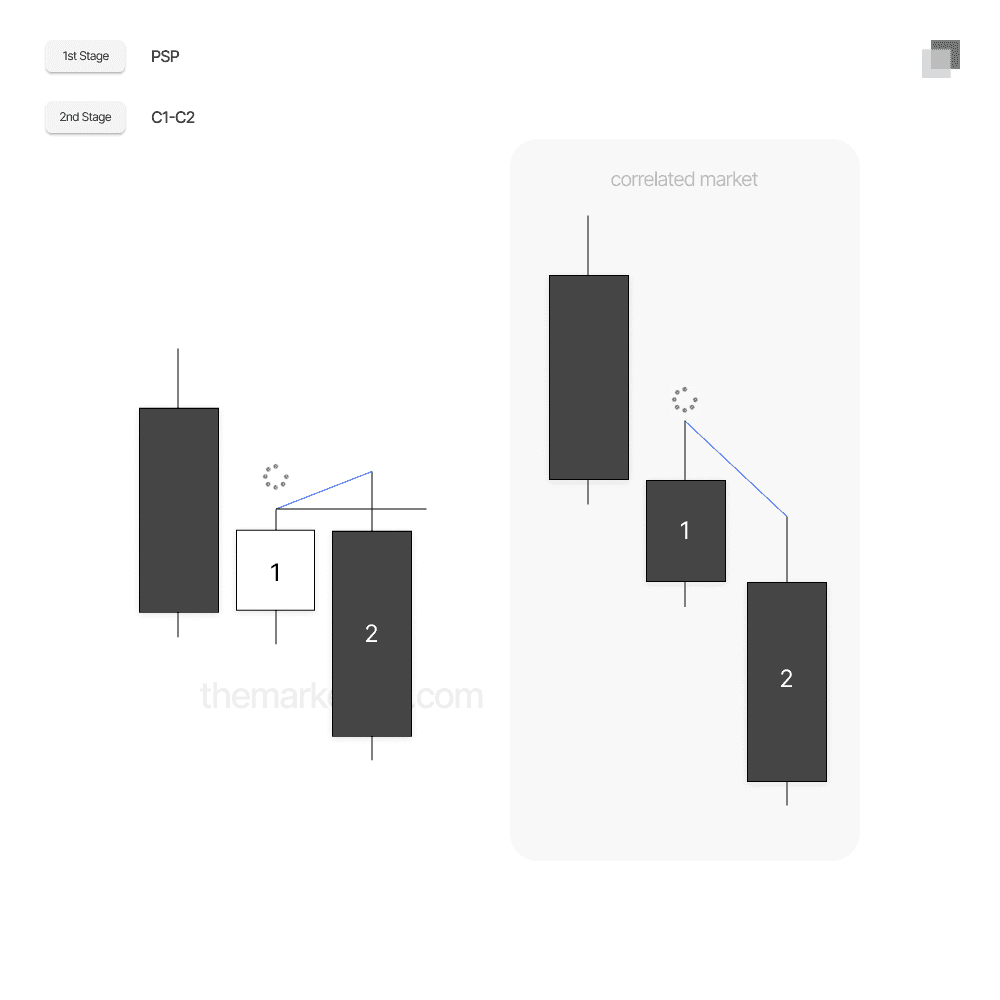
Within continuation, price will form a PSP, then reverse from the PSP high, creating a C2 candle and forming a two-stage PSP.
Within continuation, price will form a PSP, then reverse from the PSP high, creating a C2 candle and forming a two-stage PSP.
Within continuation, price will form a PSP, then reverse from the PSP high, creating a C2 candle and forming a two-stage PSP.

The standard for trading education and guidance
2026 The Market Lens - All Rights Reserved
The standard for trading education and guidance
2026 The Market Lens - All Rights Reserved
The standard for trading education and guidance