


Swing
Swing
Lesson 15 : Wicks and Equilibrium
Lesson 15 : Wicks and Equilibrium
Lesson 15 : Wicks and Equilibrium
Beginner
Beginner
3 min
3 min
Fractal Model Equilibrium
When integrating the concepts of equilibrium, closures, and candle 2 and candle 3 within the Fractal Model, the process becomes a structured approach to trading expansion. When a candle 2 or candle 3 closure occurs and the goal is to anticipate price expansion, the first step is to mark the equilibrium to identify where the wick of the OHLC is likely to form. This allows for trading the body of the candle with defined reference points.
When integrating the concepts of equilibrium, closures, and candle 2 and candle 3 within the Fractal Model, the process becomes a structured approach to trading expansion. When a candle 2 or candle 3 closure occurs and the goal is to anticipate price expansion, the first step is to mark the equilibrium to identify where the wick of the OHLC is likely to form. This allows for trading the body of the candle with defined reference points.
When integrating the concepts of equilibrium, closures, and candle 2 and candle 3 within the Fractal Model, the process becomes a structured approach to trading expansion. When a candle 2 or candle 3 closure occurs and the goal is to anticipate price expansion, the first step is to mark the equilibrium to identify where the wick of the OHLC is likely to form. This allows for trading the body of the candle with defined reference points.
In the example below, a candle 2 closure closes on its wick, so 0.5 of the wick of candle 2 is marked to anticipate respect in candle 3. Following a continuation closure in candle 3, the entire range of candle 3 is then used as a reference for candle 4, providing a structured approach to trading the continuation.
In the example below, a candle 2 closure closes on its wick, so 0.5 of the wick of candle 2 is marked to anticipate respect in candle 3. Following a continuation closure in candle 3, the entire range of candle 3 is then used as a reference for candle 4, providing a structured approach to trading the continuation.
In the example below, a candle 2 closure closes on its wick, so 0.5 of the wick of candle 2 is marked to anticipate respect in candle 3. Following a continuation closure in candle 3, the entire range of candle 3 is then used as a reference for candle 4, providing a structured approach to trading the continuation.
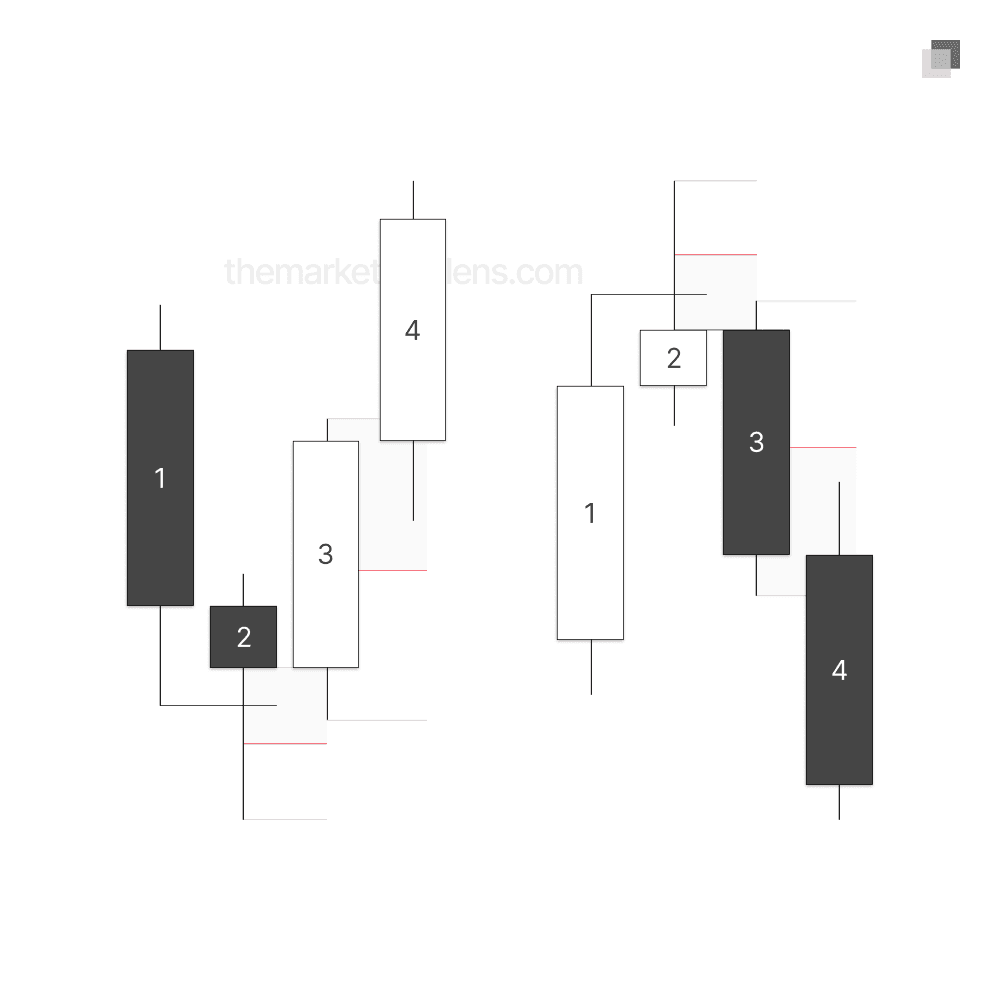
In the example below, a candle 2 closure closes away from its wick, so 0.5 of the whole range of candle 2 is marked to anticipate respect in candle 3. Following a continuation closure in candle 3, the entire range of candle 3 is then used as a reference for candle 4, providing a structured approach to trading the continuation.
In the example below, a candle 2 closure closes away from its wick, so 0.5 of the whole range of candle 2 is marked to anticipate respect in candle 3. Following a continuation closure in candle 3, the entire range of candle 3 is then used as a reference for candle 4, providing a structured approach to trading the continuation.
In the example below, a candle 2 closure closes away from its wick, so 0.5 of the whole range of candle 2 is marked to anticipate respect in candle 3. Following a continuation closure in candle 3, the entire range of candle 3 is then used as a reference for candle 4, providing a structured approach to trading the continuation.
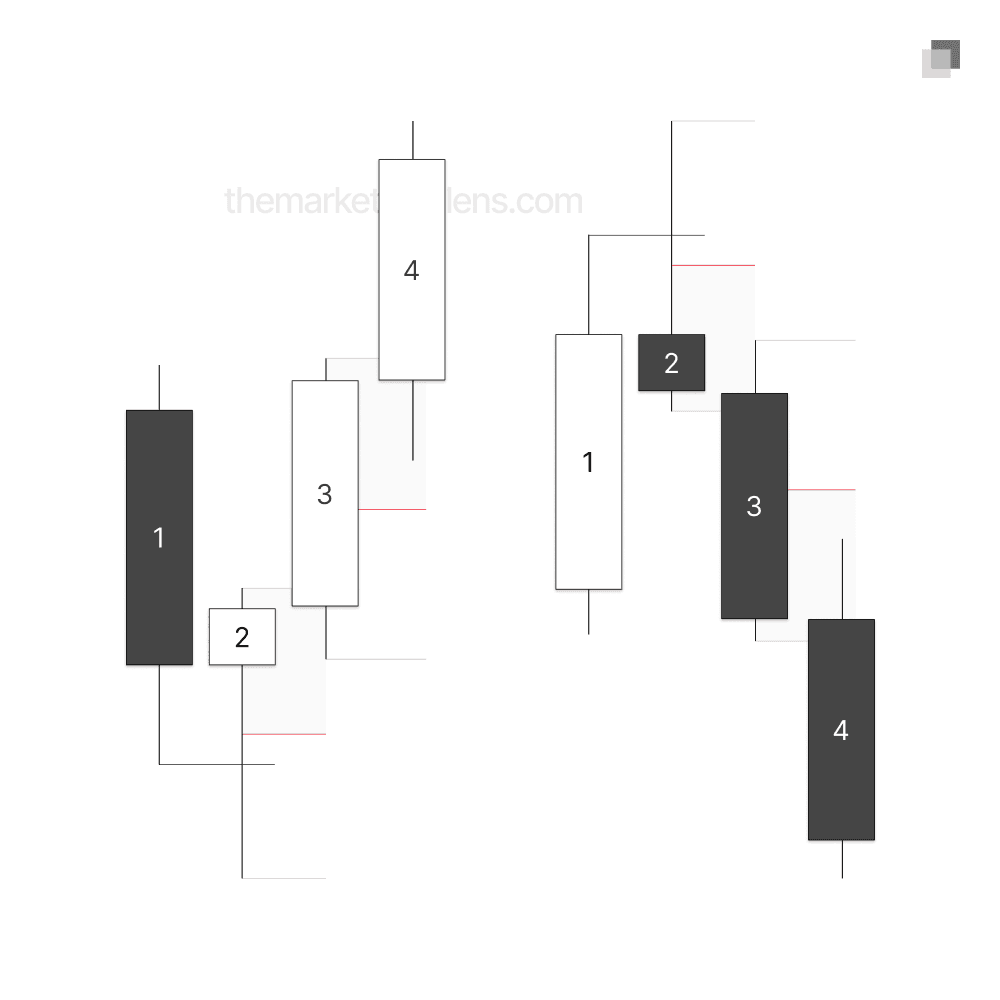
In the example below, a candle 2 closure closes with a full bodied candle, so 0.5 of the whole range of candle 2 is marked to anticipate respect in candle 3. Following a continuation closure in candle 3, the entire range of candle 3 is then used as a reference for candle 4, providing a structured approach to trading the continuation.
In the example below, a candle 2 closure closes with a full bodied candle, so 0.5 of the whole range of candle 2 is marked to anticipate respect in candle 3. Following a continuation closure in candle 3, the entire range of candle 3 is then used as a reference for candle 4, providing a structured approach to trading the continuation.
In the example below, a candle 2 closure closes with a full bodied candle, so 0.5 of the whole range of candle 2 is marked to anticipate respect in candle 3. Following a continuation closure in candle 3, the entire range of candle 3 is then used as a reference for candle 4, providing a structured approach to trading the continuation.
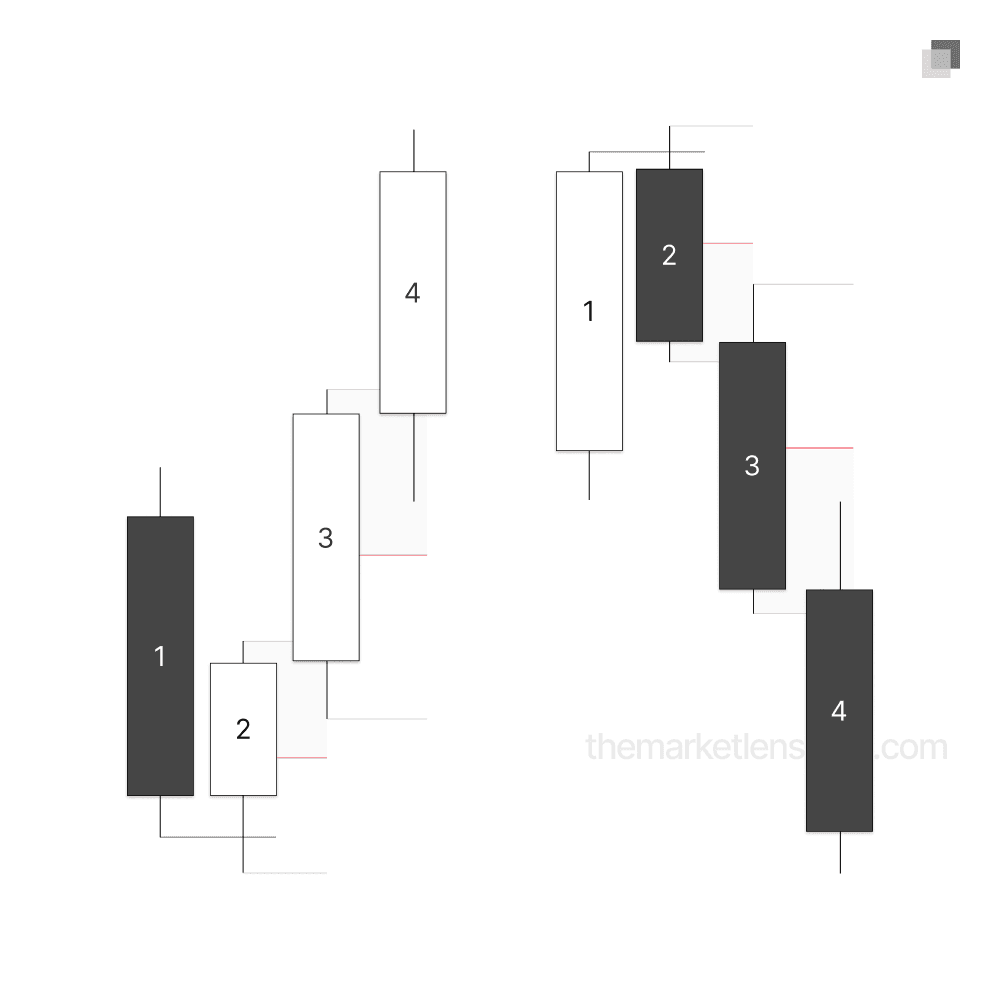
In the example below, a candle 2 closure failed to form. Allowing candle 3 to print, a candle 3 closure is formed. The 0.5 of the whole range of candle 3 is marked and then used as a reference for candle 4, providing a structured approach to trading the continuation.
In the example below, a candle 2 closure failed to form. Allowing candle 3 to print, a candle 3 closure is formed. The 0.5 of the whole range of candle 3 is marked and then used as a reference for candle 4, providing a structured approach to trading the continuation.
In the example below, a candle 2 closure failed to form. Allowing candle 3 to print, a candle 3 closure is formed. The 0.5 of the whole range of candle 3 is marked and then used as a reference for candle 4, providing a structured approach to trading the continuation.


The standard for trading education and guidance
2026 The Market Lens - All Rights Reserved
The standard for trading education and guidance
2026 The Market Lens - All Rights Reserved
The standard for trading education and guidance