


Concepts
Concepts
Lesson 1 : Opposing Candles
Lesson 1 : Opposing Candles
Lesson 1 : Opposing Candles
Beginner
Beginner
4 min
4 min
Opposing Candles
Opposing Candles
Opposing Candles
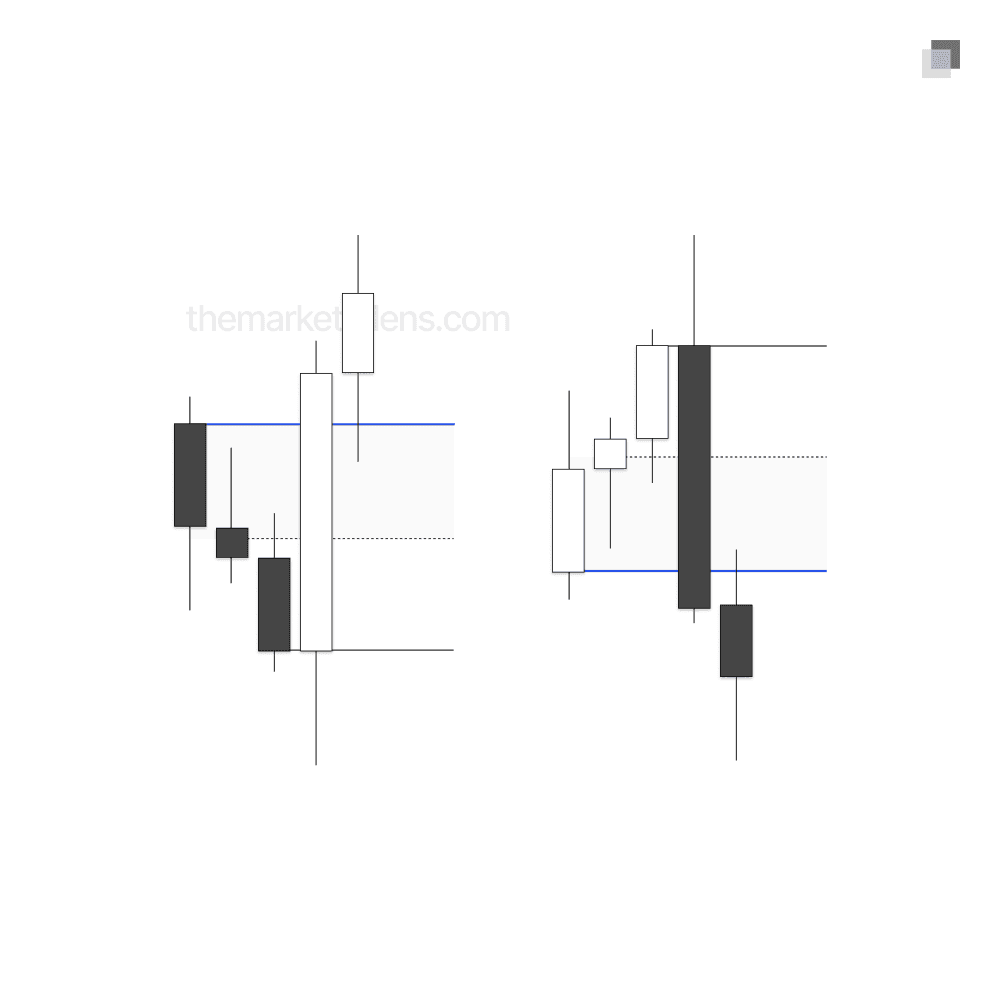
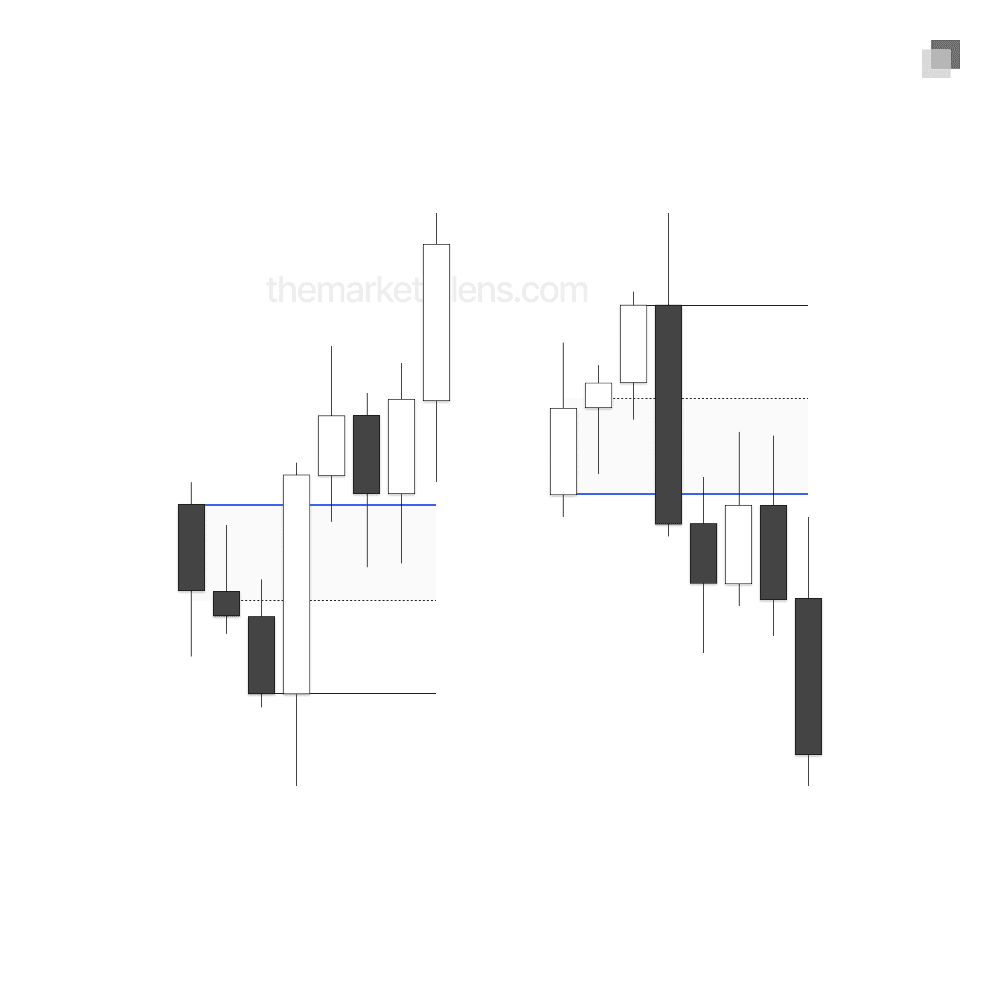
What are opposing candles? Opposing candles are the series of candles that form a high or low. Once the opening price in the series is closed over, the opposing candles are validated. At a reversal within candle 2, the closure over provides the confirmation of a shift in trend is called the change in state of delivery (CISD). Following the reversal point, new opposing candles provide opportunities for continuations by giving new invalidations for entires.
What are opposing candles? Opposing candles are the series of candles that form a high or low. Once the opening price in the series is closed over, the opposing candles are validated. At a reversal within candle 2, the closure over provides the confirmation of a shift in trend is called the change in state of delivery (CISD). Following the reversal point, new opposing candles provide opportunities for continuations by giving new invalidations for entires.
What are opposing candles? Opposing candles are the series of candles that form a high or low. Once the opening price in the series is closed over, the opposing candles are validated. At a reversal within candle 2, the closure over provides the confirmation of a shift in trend is called the change in state of delivery (CISD). Following the reversal point, new opposing candles provide opportunities for continuations by giving new invalidations for entires.
For bullish opposing candles, identify the lowest low and mark the series of down-close candles that created that low. When price closes over the opening price of that series, a bullish opposing candle is confirmed.
For bullish opposing candles, identify the lowest low and mark the series of down-close candles that created that low. When price closes over the opening price of that series, a bullish opposing candle is confirmed.
For bullish opposing candles, identify the lowest low and mark the series of down-close candles that created that low. When price closes over the opening price of that series, a bullish opposing candle is confirmed.
For bearish opposing candles, identify the highest high and mark the series of up-close candles that created that high. When price closes over the opening price of that series, a bearish opposing candle is confirmed.
For bearish opposing candles, identify the highest high and mark the series of up-close candles that created that high. When price closes over the opening price of that series, a bearish opposing candle is confirmed.
For bearish opposing candles, identify the highest high and mark the series of up-close candles that created that high. When price closes over the opening price of that series, a bearish opposing candle is confirmed.
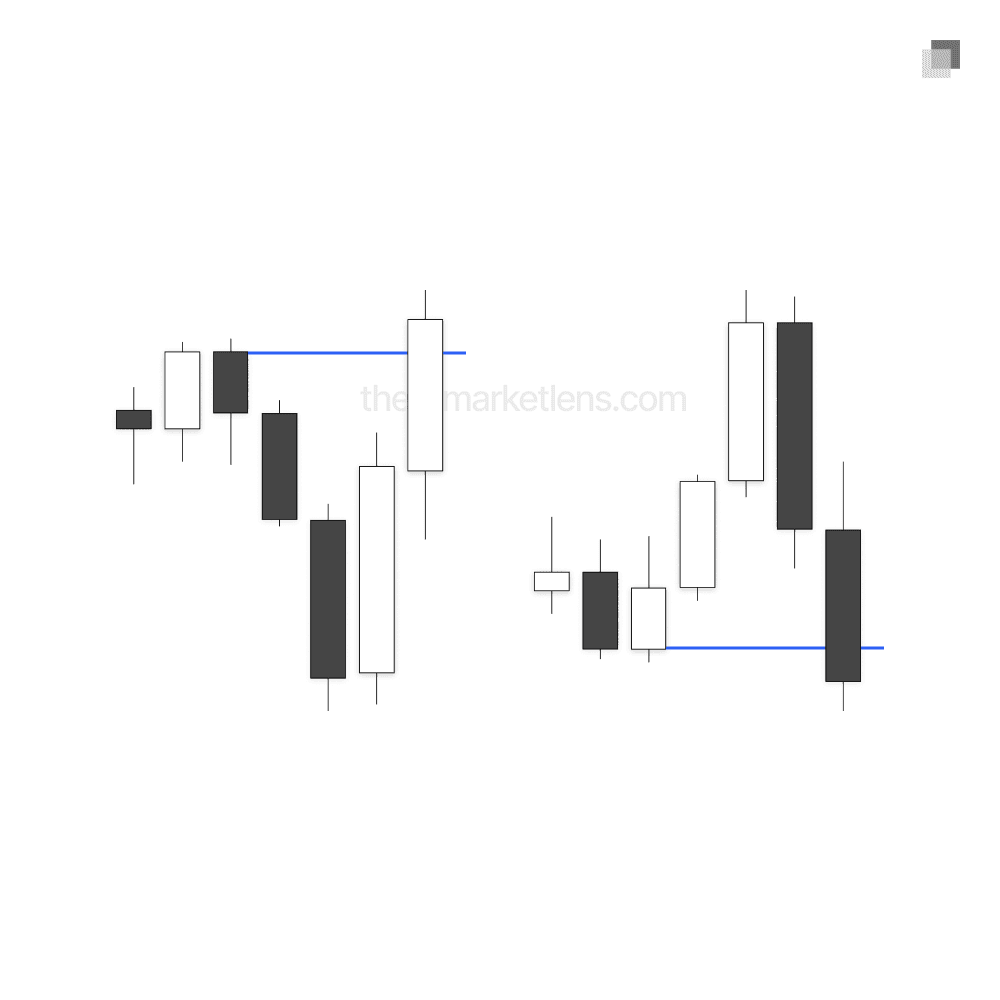
Valid Opposing Candles
Valid Opposing Candles
Valid Opposing Candles
The opposing candles that form a reversal will always originate from the highest high or the lowest low. Points of interest are not a focus for the reversal, as the design of the model establishes that structure automatically.
The opposing candles that form a reversal will always originate from the highest high or the lowest low. Points of interest are not a focus for the reversal, as the design of the model establishes that structure automatically.
The opposing candles that form a reversal will always originate from the highest high or the lowest low. Points of interest are not a focus for the reversal, as the design of the model establishes that structure automatically.
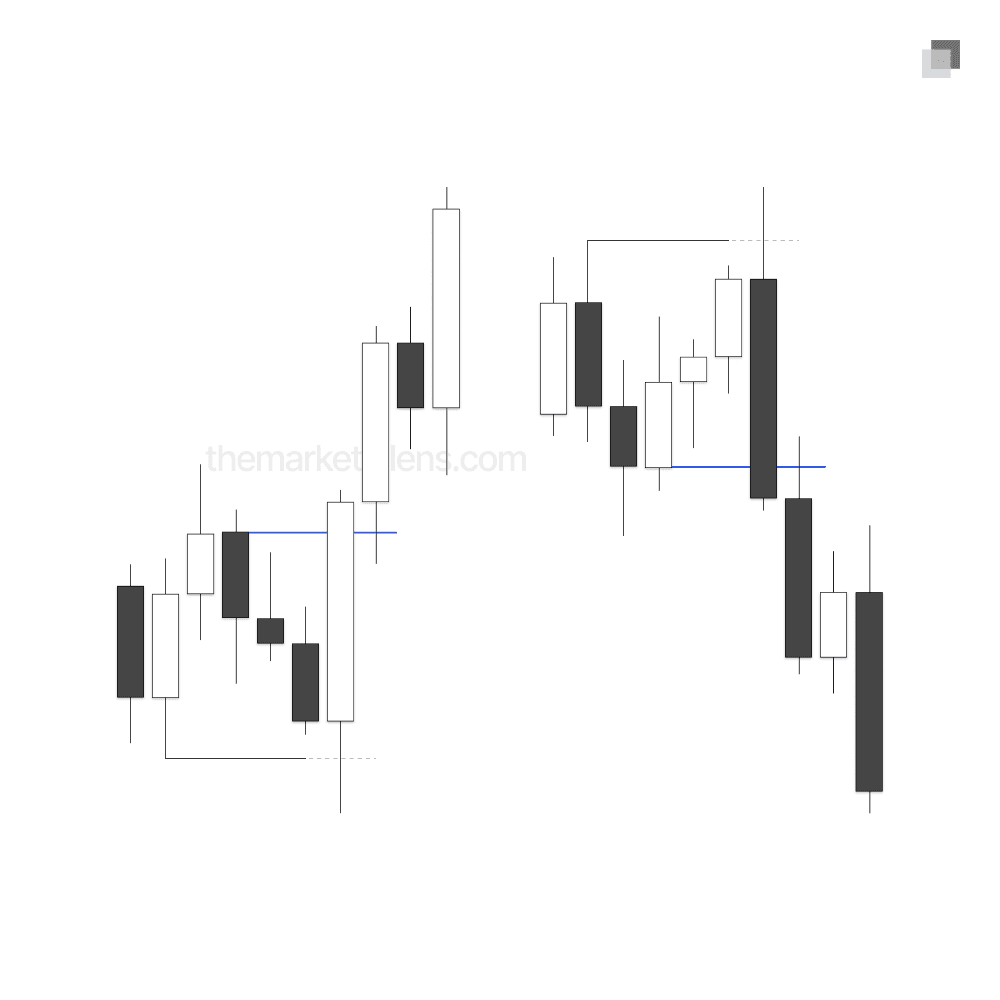
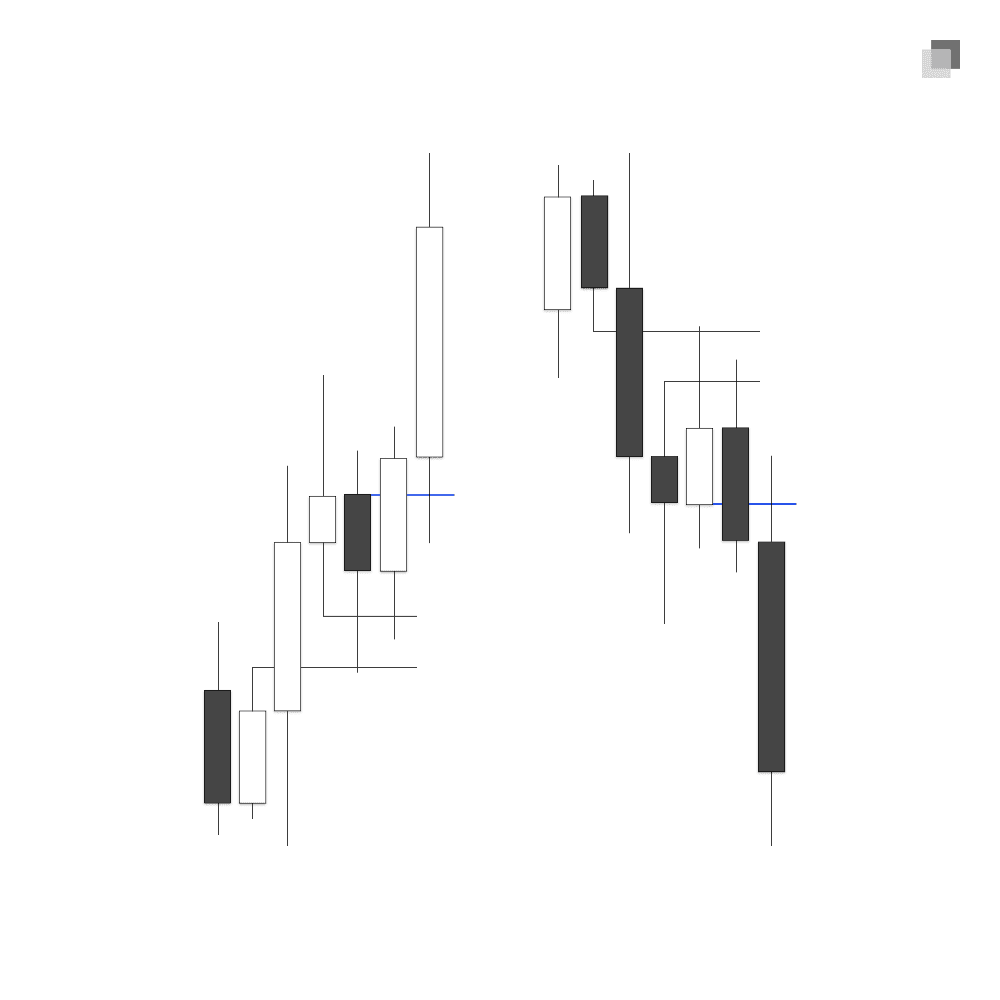
The opposing candles formed within a continuation require a defined point of interest. This point of interest will be established by either a high, a low, or a fair value gap (FVG).
The opposing candles formed within a continuation require a defined point of interest. This point of interest will be established by either a high, a low, or a fair value gap (FVG).
The opposing candles formed within a continuation require a defined point of interest. This point of interest will be established by either a high, a low, or a fair value gap (FVG).
Highs and Lows
Highs and Lows
Highs and Lows
For a continuation formed from a high or a low, identify the series of candles that created the high or low and mark the opening price within that series. Once price closes through this level, a new opposing candle is confirmed, providing both a new invalidation level and a potential entry opportunity.
For a continuation formed from a high or a low, identify the series of candles that created the high or low and mark the opening price within that series. Once price closes through this level, a new opposing candle is confirmed, providing both a new invalidation level and a potential entry opportunity.
For a continuation formed from a high or a low, identify the series of candles that created the high or low and mark the opening price within that series. Once price closes through this level, a new opposing candle is confirmed, providing both a new invalidation level and a potential entry opportunity.
Fair Value Gap
Fair Value Gap
Fair Value Gap
For a continuation formed from a fair value gap, identify the series of candles that created the high or low within the FVG and mark the opening price in that series. Once price closes through this level, a new opposing candle is confirmed, establishing a new invalidation level and a potential entry opportunity.
For a continuation formed from a fair value gap, identify the series of candles that created the high or low within the FVG and mark the opening price in that series. Once price closes through this level, a new opposing candle is confirmed, establishing a new invalidation level and a potential entry opportunity.
For a continuation formed from a fair value gap, identify the series of candles that created the high or low within the FVG and mark the opening price in that series. Once price closes through this level, a new opposing candle is confirmed, establishing a new invalidation level and a potential entry opportunity.
No Point of Interest
No Point of Interest
No Point of Interest
In situations where no high, low, or FVG exists between the reversal opposing candles and the current price, the opposing candle itself becomes the point of interest. This is the only case where the CISD is to be used.
In situations where no high, low, or FVG exists between the reversal opposing candles and the current price, the opposing candle itself becomes the point of interest. This is the only case where the CISD is to be used.
In situations where no high, low, or FVG exists between the reversal opposing candles and the current price, the opposing candle itself becomes the point of interest. This is the only case where the CISD is to be used.
50% of Opposing Candles
50% of Opposing Candles
50% of Opposing Candles
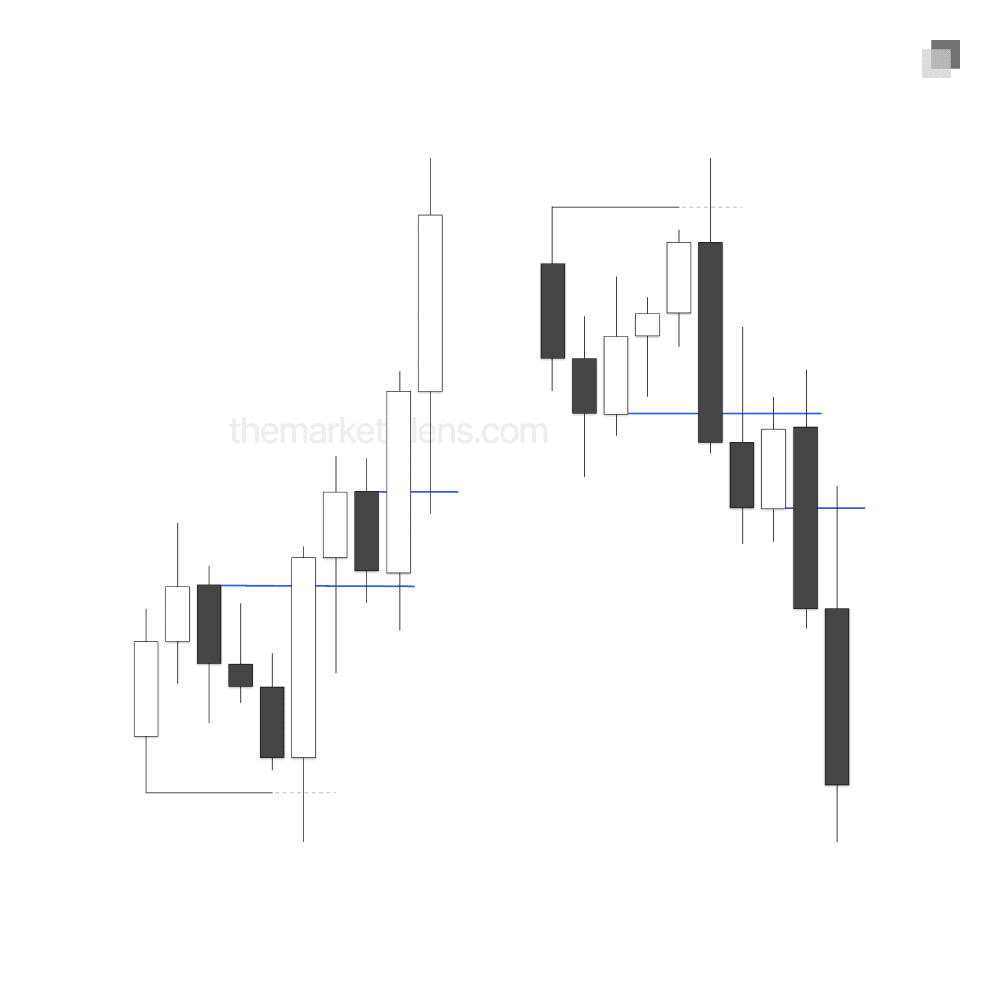
Upon a reversal or within a trend, opposing candles should be respected as price progresses in the intended direction. Using a Fibonacci tool, mark the 0.5 level of the opposing candles, measured from body to body. The zone between the opening price and the 0.5 level of the opposing candles should hold as respected. Respect in this context means that price does not close through the 50 percent level of the opposing candle, represented by the dotted line below.
Upon a reversal or within a trend, opposing candles should be respected as price progresses in the intended direction. Using a Fibonacci tool, mark the 0.5 level of the opposing candles, measured from body to body. The zone between the opening price and the 0.5 level of the opposing candles should hold as respected. Respect in this context means that price does not close through the 50 percent level of the opposing candle, represented by the dotted line below.
Upon a reversal or within a trend, opposing candles should be respected as price progresses in the intended direction. Using a Fibonacci tool, mark the 0.5 level of the opposing candles, measured from body to body. The zone between the opening price and the 0.5 level of the opposing candles should hold as respected. Respect in this context means that price does not close through the 50 percent level of the opposing candle, represented by the dotted line below.

The standard for trading education and guidance
2026 The Market Lens - All Rights Reserved
The standard for trading education and guidance
2026 The Market Lens - All Rights Reserved
The standard for trading education and guidance