


Execution
Execution
Lesson 28 : Entry Timing
Lesson 28 : Entry Timing
Lesson 28 : Entry Timing
Beginner
Beginner
2 min
2 min
Entry Time
Entry Time
Entry Time
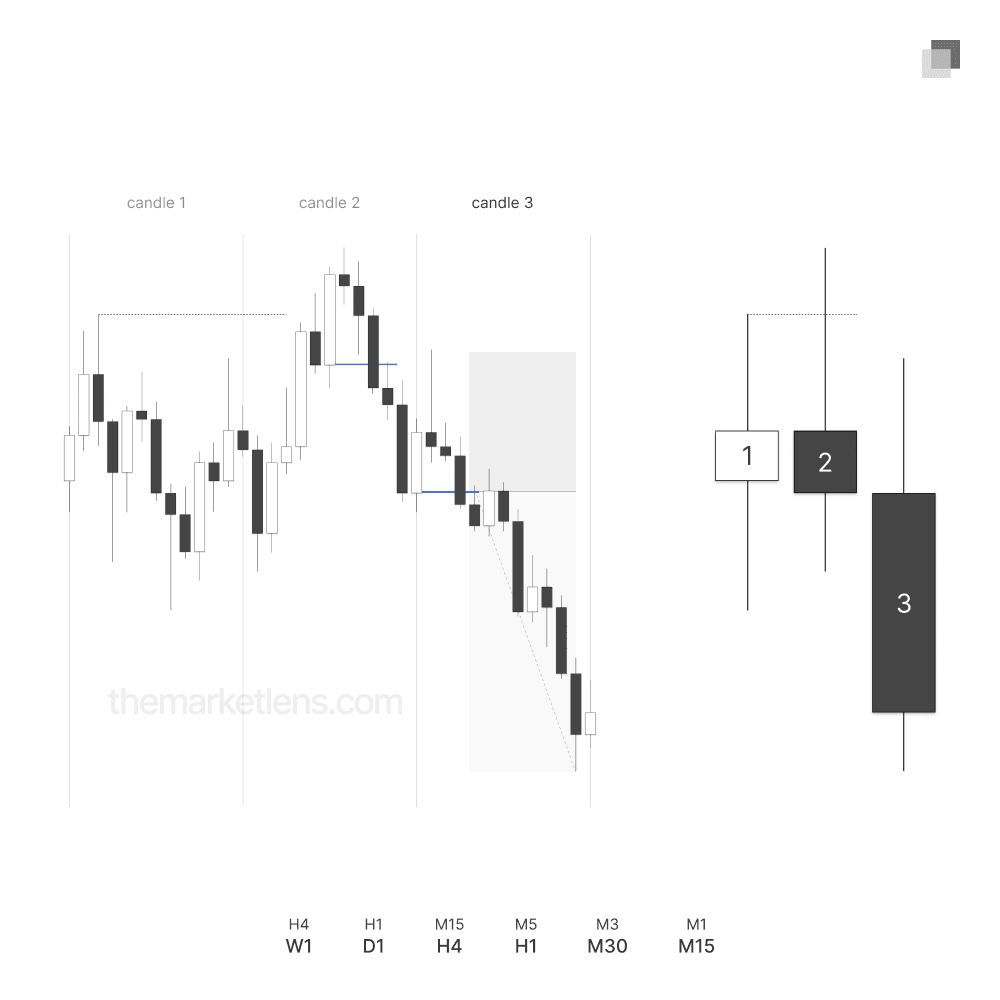
Understanding that the Fractal Model is built around trading expansion candles, which form their wick early, expand through the majority of the candle, and then close near the high or low, it is ideal to seek entry early in the given higher timeframe period. As shown below, the high of the candle is formed early, and price then trends before closing near its low. This makes it advantageous to find an entry early in the candle, ideally after an IC-CISD has formed within the higher timeframe candle.
Understanding that the Fractal Model is built around trading expansion candles, which form their wick early, expand through the majority of the candle, and then close near the high or low, it is ideal to seek entry early in the given higher timeframe period. As shown below, the high of the candle is formed early, and price then trends before closing near its low. This makes it advantageous to find an entry early in the candle, ideally after an IC-CISD has formed within the higher timeframe candle.
Understanding that the Fractal Model is built around trading expansion candles, which form their wick early, expand through the majority of the candle, and then close near the high or low, it is ideal to seek entry early in the given higher timeframe period. As shown below, the high of the candle is formed early, and price then trends before closing near its low. This makes it advantageous to find an entry early in the candle, ideally after an IC-CISD has formed within the higher timeframe candle.
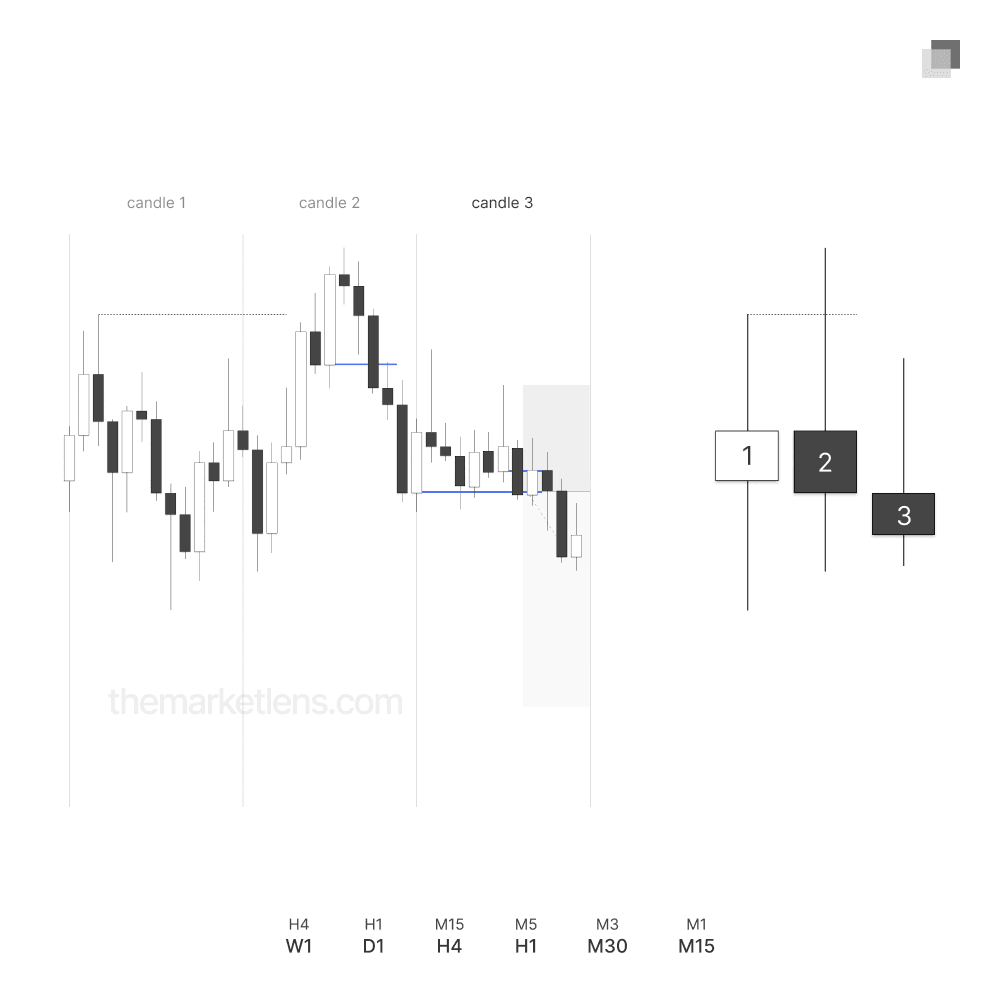
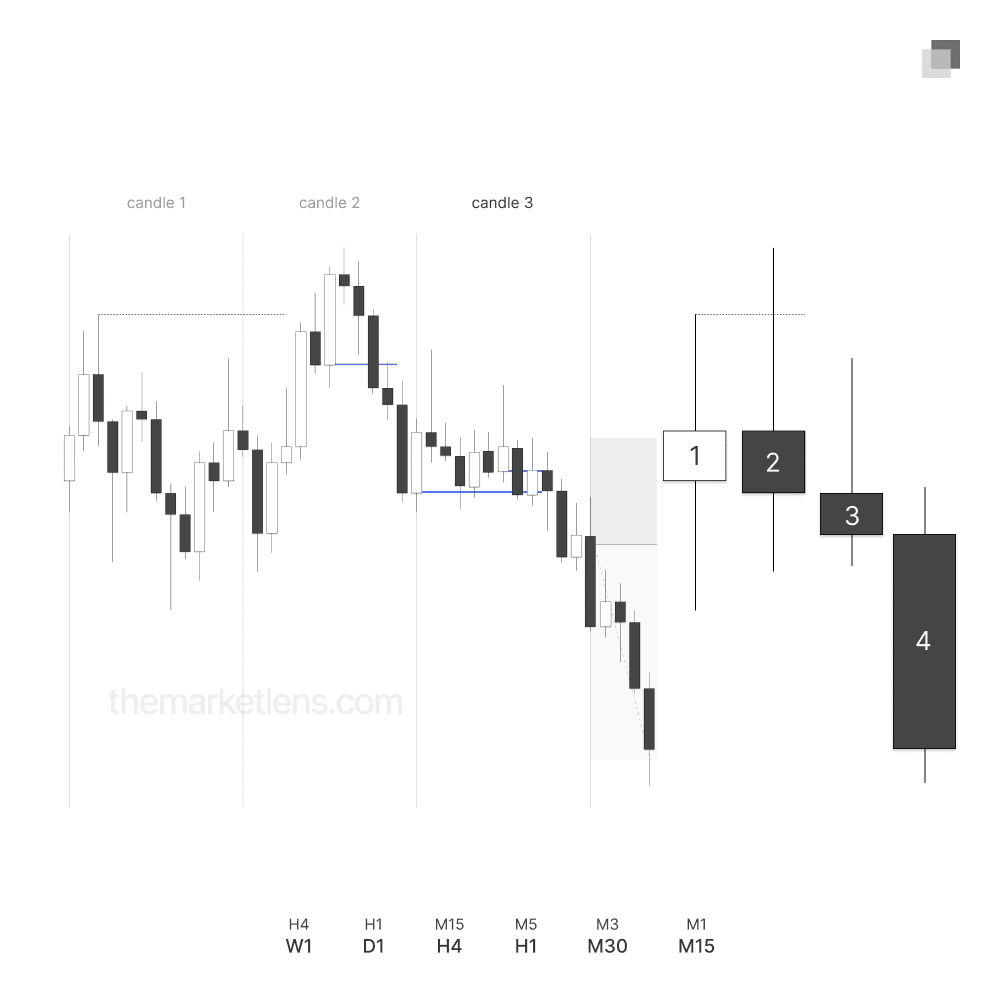
Here you can see that price fails to form its IC-CISD early in the candle. This makes entering later in the candle less ideal, as candle 3 is not expected to produce a large expansion in the final portion of the candle. While these entries can still work, price will often wait for the next candle to begin its expansion. Some traders prefer to take this type of entry to position themselves for the expansion in candle 4, while others wait to enter around the opening of candle 4.
Here you can see that price fails to form its IC-CISD early in the candle. This makes entering later in the candle less ideal, as candle 3 is not expected to produce a large expansion in the final portion of the candle. While these entries can still work, price will often wait for the next candle to begin its expansion. Some traders prefer to take this type of entry to position themselves for the expansion in candle 4, while others wait to enter around the opening of candle 4.
Here you can see that price fails to form its IC-CISD early in the candle. This makes entering later in the candle less ideal, as candle 3 is not expected to produce a large expansion in the final portion of the candle. While these entries can still work, price will often wait for the next candle to begin its expansion. Some traders prefer to take this type of entry to position themselves for the expansion in candle 4, while others wait to enter around the opening of candle 4.

The standard for trading education and guidance
2026 The Market Lens - All Rights Reserved
The standard for trading education and guidance
2026 The Market Lens - All Rights Reserved
The standard for trading education and guidance