


Concepts
Concepts
Lesson 2 : SMT
Lesson 2 : SMT
Lesson 2 : SMT
Advanced
Advanced
2 min
2 min
SMT
SMT
SMT
SMT is a divergence, representing a difference in structure between correlated assets. This divergence can provide clues that price is likely to reverse. It is important to note that SMT functions as a confluence to an existing setup and should not be used to generate setups independently. Within the Fractal Model, SMT is identified by examining swing points on the higher timeframe. If one asset sweeps a previous high while the correlated asset does not, this constitutes an SMT.
SMT is a divergence, representing a difference in structure between correlated assets. This divergence can provide clues that price is likely to reverse. It is important to note that SMT functions as a confluence to an existing setup and should not be used to generate setups independently. Within the Fractal Model, SMT is identified by examining swing points on the higher timeframe. If one asset sweeps a previous high while the correlated asset does not, this constitutes an SMT.
SMT is a divergence, representing a difference in structure between correlated assets. This divergence can provide clues that price is likely to reverse. It is important to note that SMT functions as a confluence to an existing setup and should not be used to generate setups independently. Within the Fractal Model, SMT is identified by examining swing points on the higher timeframe. If one asset sweeps a previous high while the correlated asset does not, this constitutes an SMT.
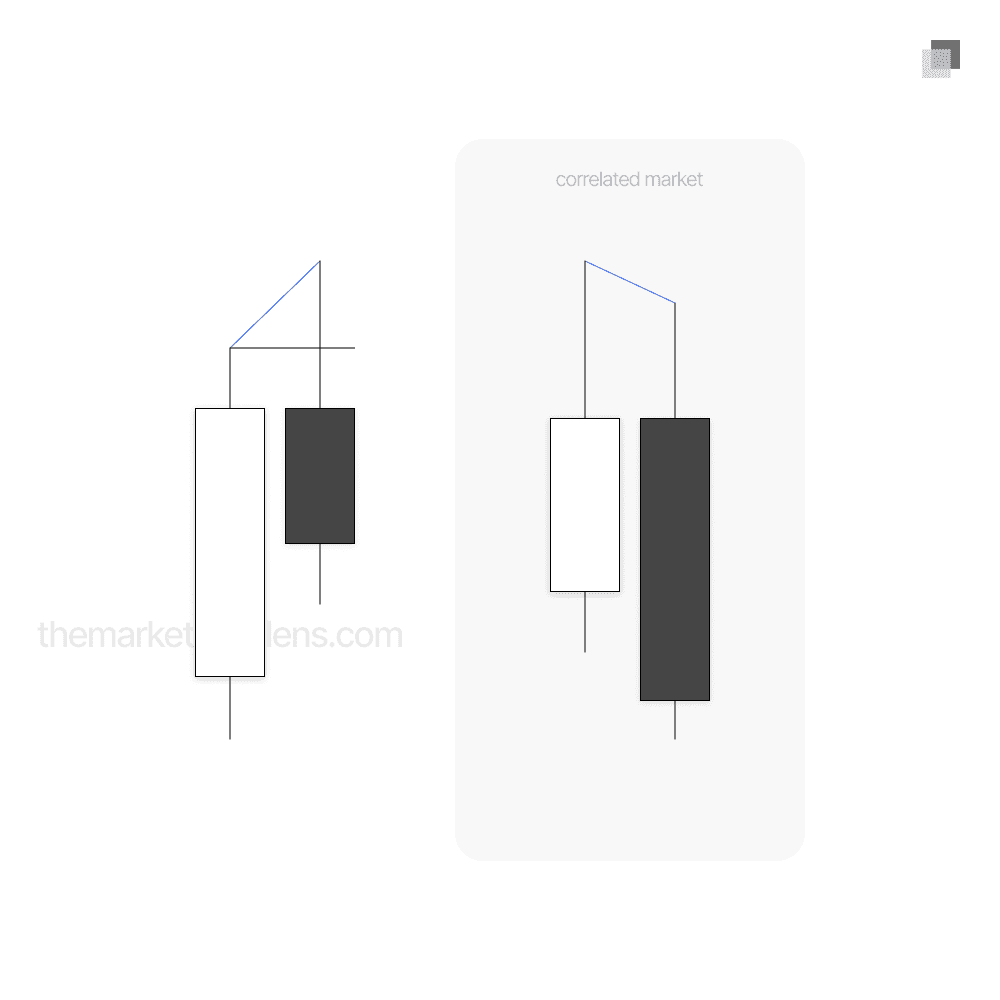
Reversal SMT (C1, C2)
Reversal SMT (C1, C2)
Reversal SMT (C1, C2)
Reversal SMT occurs when there is SMT between candle 1 and candle 2 on the higher timeframe, and the correlated asset fails to take out the high of candle 1.
Reversal SMT occurs when there is SMT between candle 1 and candle 2 on the higher timeframe, and the correlated asset fails to take out the high of candle 1.
Reversal SMT occurs when there is SMT between candle 1 and candle 2 on the higher timeframe, and the correlated asset fails to take out the high of candle 1.
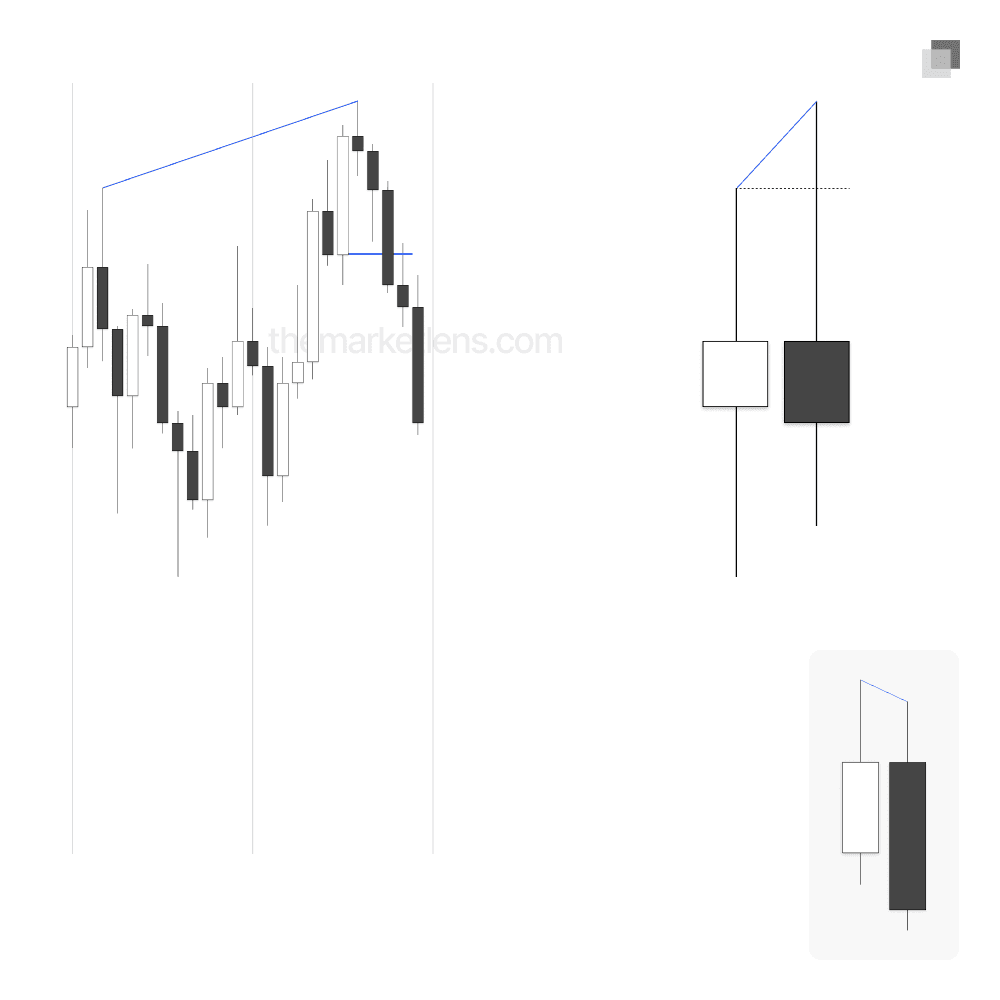
Continuation SMT (C2, C3)
Continuation SMT (C2, C3)
Continuation SMT (C2, C3)
Continuation SMT occurs when there is SMT between candle 2 and candle 3 on the higher timeframe, and the correlated asset takes out the high of candle 2.
Continuation SMT occurs when there is SMT between candle 2 and candle 3 on the higher timeframe, and the correlated asset takes out the high of candle 2.
Continuation SMT occurs when there is SMT between candle 2 and candle 3 on the higher timeframe, and the correlated asset takes out the high of candle 2.
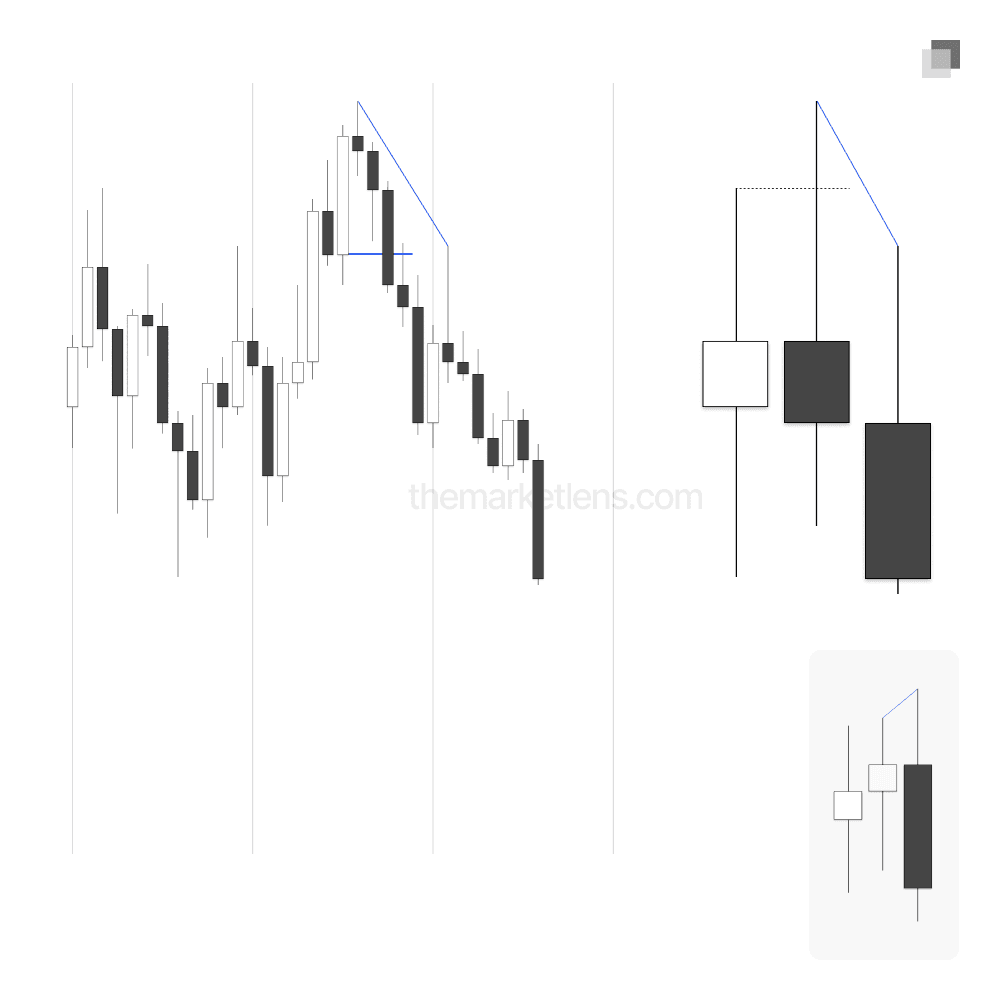
Double SMT (C1, C2, C3)
Double SMT (C1, C2, C3)
Double SMT (C1, C2, C3)
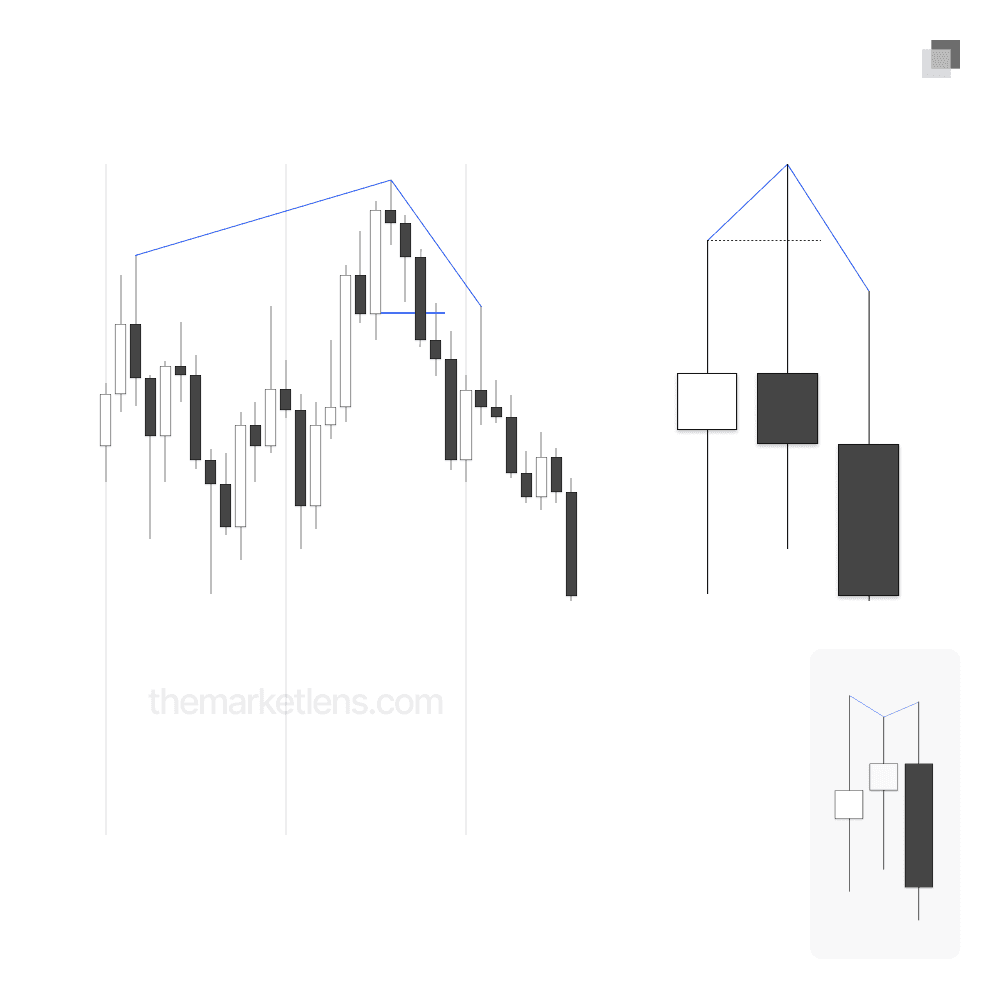
Double SMT occurs when there is SMT between candle 1, candle 2, and candle 3 on the higher timeframe. In this scenario, the correlated asset fails to take out the high of candle 1 but successfully takes out the high of candle 2.
Double SMT occurs when there is SMT between candle 1, candle 2, and candle 3 on the higher timeframe. In this scenario, the correlated asset fails to take out the high of candle 1 but successfully takes out the high of candle 2.
Double SMT occurs when there is SMT between candle 1, candle 2, and candle 3 on the higher timeframe. In this scenario, the correlated asset fails to take out the high of candle 1 but successfully takes out the high of candle 2.

The standard for trading education and guidance
2026 The Market Lens - All Rights Reserved
The standard for trading education and guidance
2026 The Market Lens - All Rights Reserved
The standard for trading education and guidance