


Execution
Execution
Lesson 5 : Candle Closure Entries
Lesson 5 : Candle Closure Entries
Lesson 5 : Candle Closure Entries
Advanced
Advanced
1 min
1 min
Candle Closure Entries
Candle Closure Entries
Candle Closure Entries
Candle closure entries are more advanced and challenging, requiring significant experience as well as a clear context and framework for the given trade. Because these trades occur prior to the formation of a new protected swing, they essentially involve attempting to catch a high or low, which increases the level of risk.
Candle closure entries are more advanced and challenging, requiring significant experience as well as a clear context and framework for the given trade. Because these trades occur prior to the formation of a new protected swing, they essentially involve attempting to catch a high or low, which increases the level of risk.
Candle closure entries are more advanced and challenging, requiring significant experience as well as a clear context and framework for the given trade. Because these trades occur prior to the formation of a new protected swing, they essentially involve attempting to catch a high or low, which increases the level of risk.
Using the principles of candle 2 closures and seeking trades in candle 3, it is possible, with a high level of confidence in the framework, to enter the market at the open of candle 3 with the stop placed on candle 2. This approach offers an attractive risk-reward ratio but carries increased risk, as there is no protected swing and less confirmation compared to waiting for the IC-CISD.
Using the principles of candle 2 closures and seeking trades in candle 3, it is possible, with a high level of confidence in the framework, to enter the market at the open of candle 3 with the stop placed on candle 2. This approach offers an attractive risk-reward ratio but carries increased risk, as there is no protected swing and less confirmation compared to waiting for the IC-CISD.
Using the principles of candle 2 closures and seeking trades in candle 3, it is possible, with a high level of confidence in the framework, to enter the market at the open of candle 3 with the stop placed on candle 2. This approach offers an attractive risk-reward ratio but carries increased risk, as there is no protected swing and less confirmation compared to waiting for the IC-CISD.
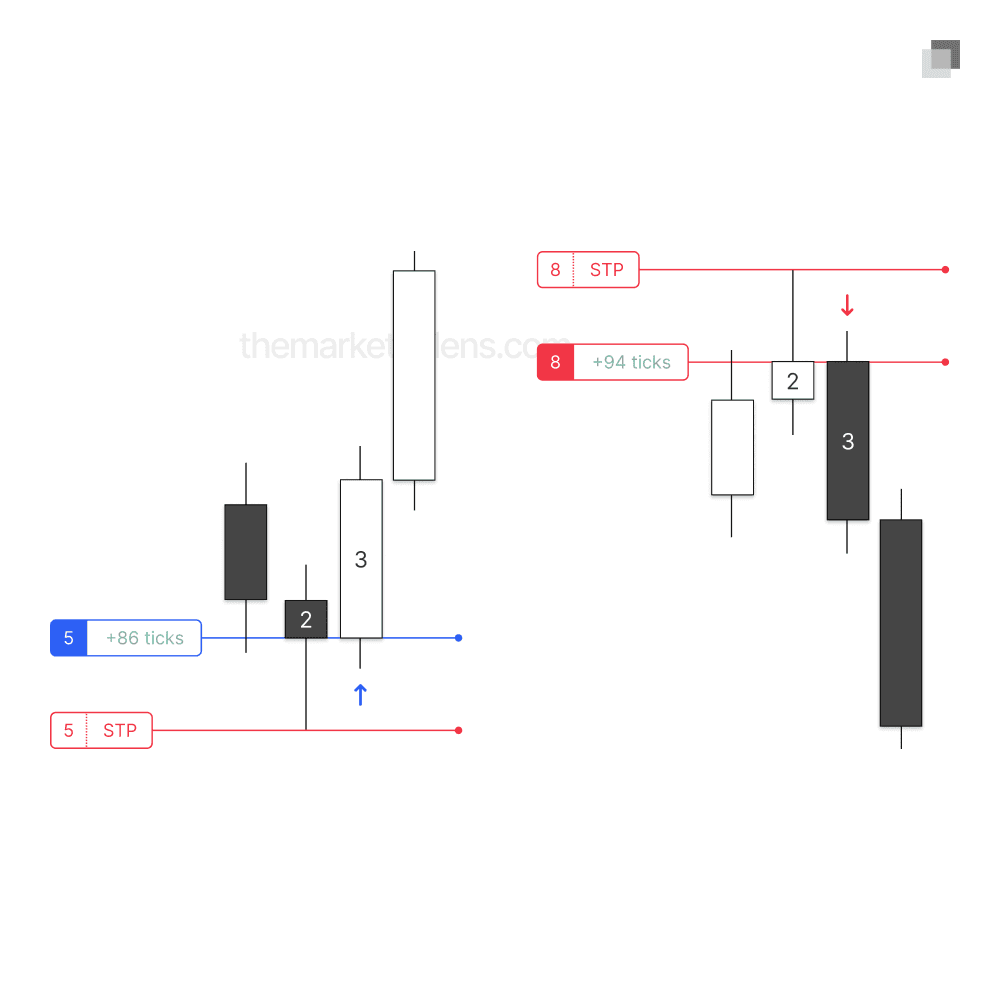
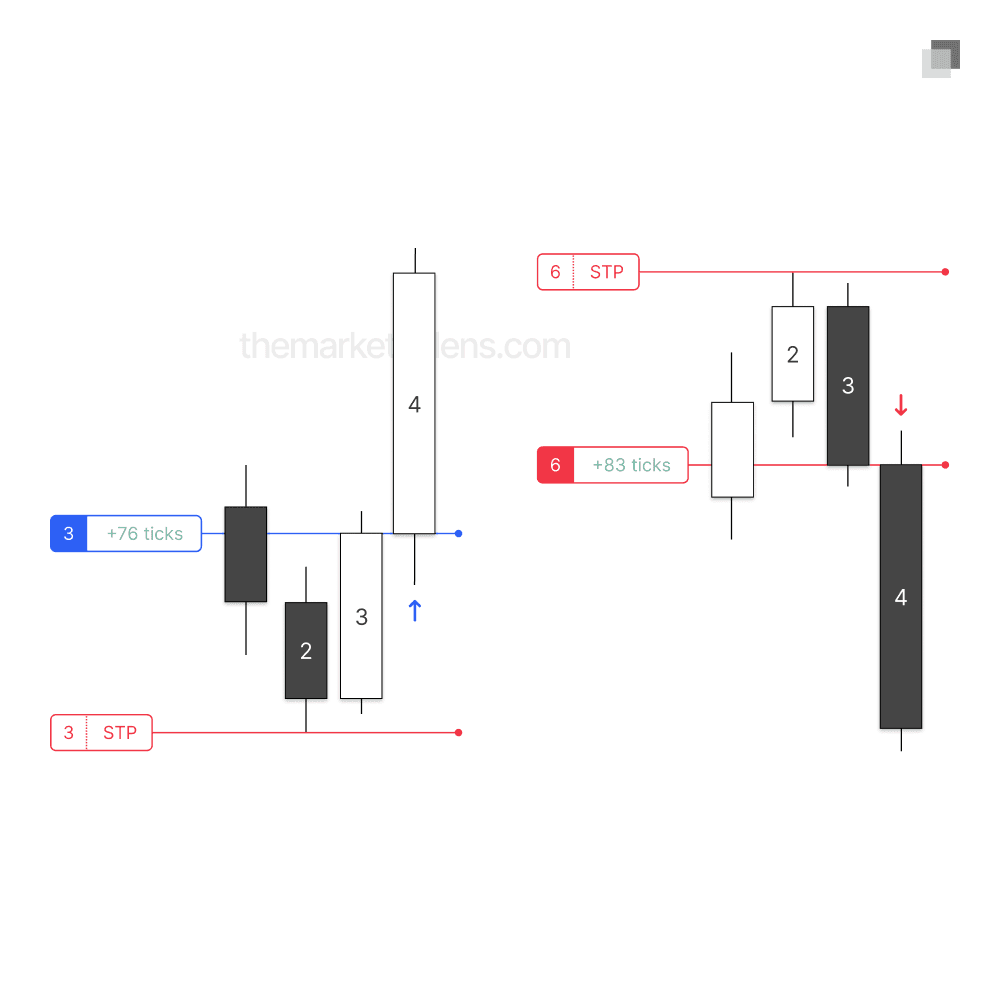
Using the principles of candle 3 closures and seeking trades in candle 4, it is possible, with a high level of confidence in the framework, to enter the market at the open of candle 4 with the stop placed on candle 2. This approach offers an attractive risk-reward ratio but carries increased risk, as there is no protected swing and less confirmation compared to waiting for the IC-CISD.
Using the principles of candle 3 closures and seeking trades in candle 4, it is possible, with a high level of confidence in the framework, to enter the market at the open of candle 4 with the stop placed on candle 2. This approach offers an attractive risk-reward ratio but carries increased risk, as there is no protected swing and less confirmation compared to waiting for the IC-CISD.
Using the principles of candle 3 closures and seeking trades in candle 4, it is possible, with a high level of confidence in the framework, to enter the market at the open of candle 4 with the stop placed on candle 2. This approach offers an attractive risk-reward ratio but carries increased risk, as there is no protected swing and less confirmation compared to waiting for the IC-CISD.

The standard for trading education and guidance
2026 The Market Lens - All Rights Reserved
The standard for trading education and guidance
2026 The Market Lens - All Rights Reserved
The standard for trading education and guidance