


Entry
Entry
Lesson 6 : Entry Logic
Lesson 6 : Entry Logic
Lesson 6 : Entry Logic
Advanced
Advanced
8 min
8 min
Standard Entry Logic
Standard Entry Logic
Standard Entry Logic
Now that positions can be taken in both the 01:00 and 08:00 candles, new rules must be applied to timeframe alignment on entries. Because market conditions differ between the London and New York sessions, the entry signatures required for each are treated independently.
Now that positions can be taken in both the 01:00 and 08:00 candles, new rules must be applied to timeframe alignment on entries. Because market conditions differ between the London and New York sessions, the entry signatures required for each are treated independently.
Now that positions can be taken in both the 01:00 and 08:00 candles, new rules must be applied to timeframe alignment on entries. Because market conditions differ between the London and New York sessions, the entry signatures required for each are treated independently.
While this advanced lesson will cover specific nuances, the standard entry logic remains the same.
While this advanced lesson will cover specific nuances, the standard entry logic remains the same.
While this advanced lesson will cover specific nuances, the standard entry logic remains the same.
Valid opposing candles: Signatures must have clear opposing candle bodies and offer enough range to protect your stop loss.
Valid opposing candles: Signatures must have clear opposing candle bodies and offer enough range to protect your stop loss.
Valid opposing candles: Signatures must have clear opposing candle bodies and offer enough range to protect your stop loss.
Entry confluences: Confluences can and should be added the baseline valid opposing candles int he continuation for higher quality entry signatures.
Entry confluences: Confluences can and should be added the baseline valid opposing candles int he continuation for higher quality entry signatures.
Entry confluences: Confluences can and should be added the baseline valid opposing candles int he continuation for higher quality entry signatures.
Stop loss placement: Stop losses must always be placed on the opposing swing of the signature.
Stop loss placement: Stop losses must always be placed on the opposing swing of the signature.
Stop loss placement: Stop losses must always be placed on the opposing swing of the signature.
Market order entry: Entries are taken on the initial close through the opposing candles with a market order.
Market order entry: Entries are taken on the initial close through the opposing candles with a market order.
Market order entry: Entries are taken on the initial close through the opposing candles with a market order.
01:00 Candle Entries
01:00 Candle Entries
01:00 Candle Entries
Timeframe alignment: 30-minute and 15-minute
Timeframe alignment: 30-minute and 15-minute
Timeframe alignment: 30-minute and 15-minute
Relative higher timeframes are applied for entries within the 01:00 candle for several reasons. On average, these are slower hours of the trading day, which creates an advantage for signatures to develop on higher timeframe alignment. This approach also filters out the lower probability of reversal, since only twenty percent of 01:00 candles form the point of reversal on expansion days.
Relative higher timeframes are applied for entries within the 01:00 candle for several reasons. On average, these are slower hours of the trading day, which creates an advantage for signatures to develop on higher timeframe alignment. This approach also filters out the lower probability of reversal, since only twenty percent of 01:00 candles form the point of reversal on expansion days.
Relative higher timeframes are applied for entries within the 01:00 candle for several reasons. On average, these are slower hours of the trading day, which creates an advantage for signatures to develop on higher timeframe alignment. This approach also filters out the lower probability of reversal, since only twenty percent of 01:00 candles form the point of reversal on expansion days.
Additional factors must be considered when executing entries during the London session. This period carries less context within the daily profile, lacks major volatility drivers, and is slower overall, which makes filters necessary.
Additional factors must be considered when executing entries during the London session. This period carries less context within the daily profile, lacks major volatility drivers, and is slower overall, which makes filters necessary.
Additional factors must be considered when executing entries during the London session. This period carries less context within the daily profile, lacks major volatility drivers, and is slower overall, which makes filters necessary.
Caution is required when overnight sessions show little volatility. If a tight consolidation carries into the London session and through the 03:00 open, positioning should be avoided. Entries within the 01:00 candle demand a market capable of sustaining a move; otherwise, the risk of being stopped out increases.
Caution is required when overnight sessions show little volatility. If a tight consolidation carries into the London session and through the 03:00 open, positioning should be avoided. Entries within the 01:00 candle demand a market capable of sustaining a move; otherwise, the risk of being stopped out increases.
Caution is required when overnight sessions show little volatility. If a tight consolidation carries into the London session and through the 03:00 open, positioning should be avoided. Entries within the 01:00 candle demand a market capable of sustaining a move; otherwise, the risk of being stopped out increases.
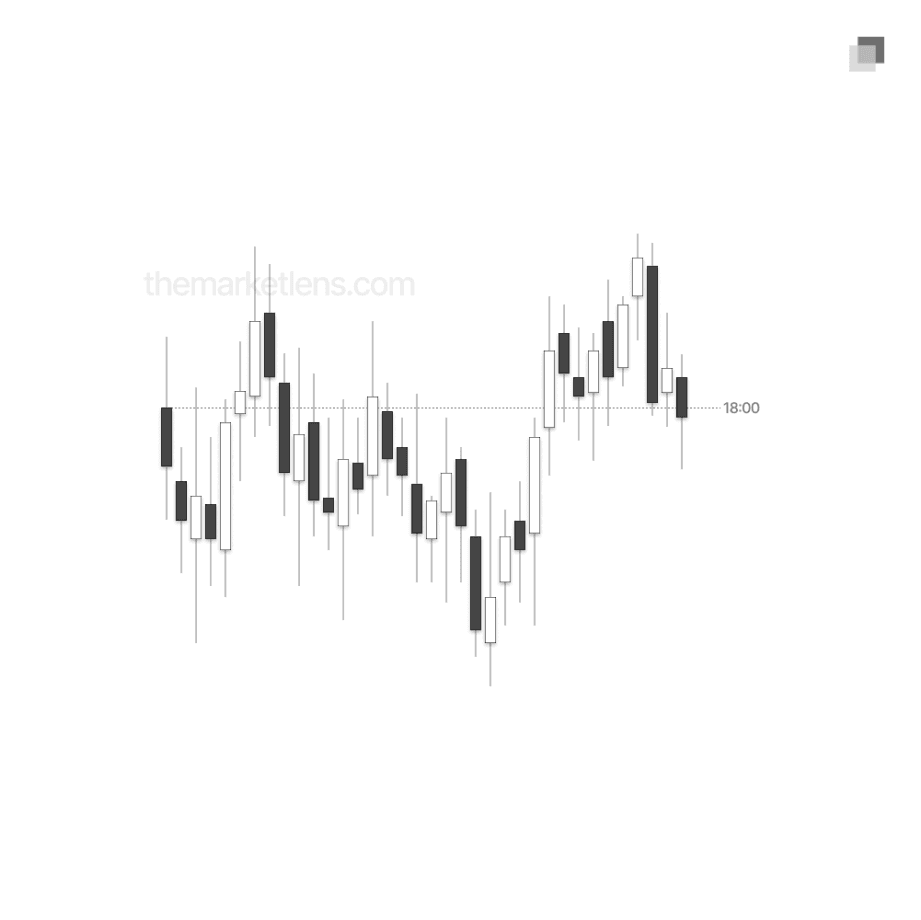
Greater emphasis must be placed on entry signatures that are high in quality and offer sufficient range. With reduced average volatility, insignificant signatures that fail to protect a stop loss are more likely to result in unnecessary losses. Adhering to this rule ensures that only valid structures are acted upon.
Greater emphasis must be placed on entry signatures that are high in quality and offer sufficient range. With reduced average volatility, insignificant signatures that fail to protect a stop loss are more likely to result in unnecessary losses. Adhering to this rule ensures that only valid structures are acted upon.
Greater emphasis must be placed on entry signatures that are high in quality and offer sufficient range. With reduced average volatility, insignificant signatures that fail to protect a stop loss are more likely to result in unnecessary losses. Adhering to this rule ensures that only valid structures are acted upon.
08:00 Candle Entries
08:00 Candle Entries
08:00 Candle Entries
Timeframe alignment: 15-minute and 5-minute
Timeframe alignment: 15-minute and 5-minute
Timeframe alignment: 15-minute and 5-minute
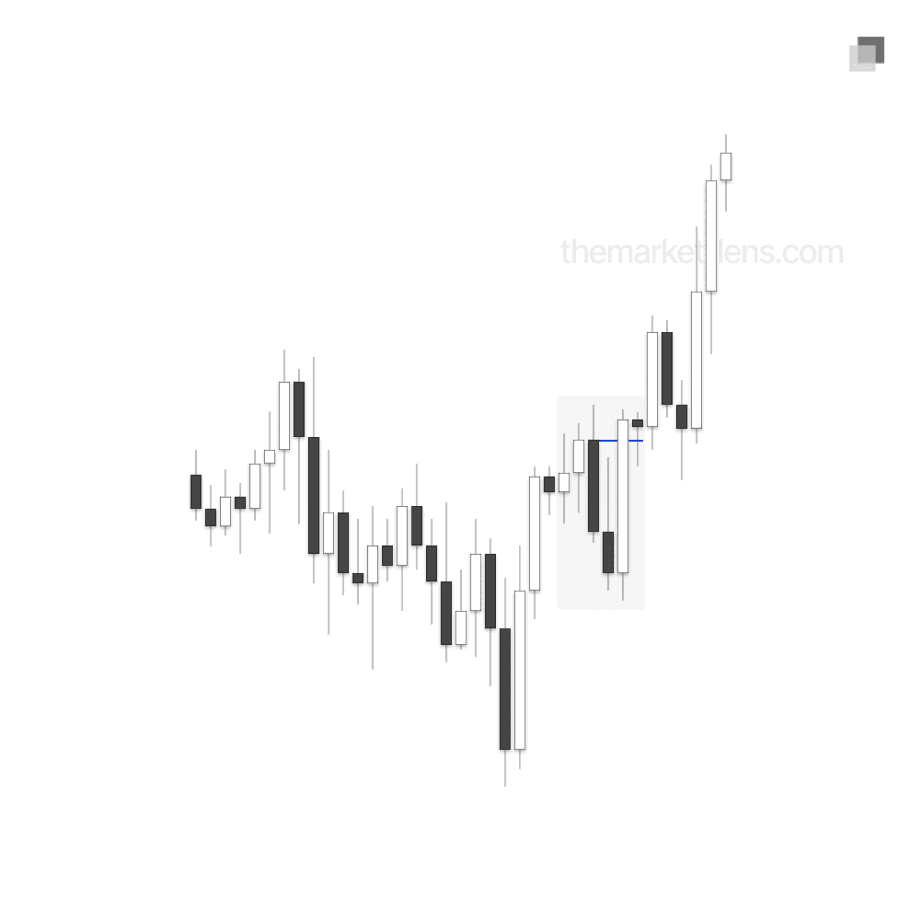
Relative lower timeframes are applied for entries within the 08:00 candle for the opposite reasons. On average, these are the most volatile hours of the trading day, which allows signatures to form in shorter periods. There is also added benefit of more context from the developed daily range, which allows for a more complete decision on lower timeframes.
Relative lower timeframes are applied for entries within the 08:00 candle for the opposite reasons. On average, these are the most volatile hours of the trading day, which allows signatures to form in shorter periods. There is also added benefit of more context from the developed daily range, which allows for a more complete decision on lower timeframes.
Relative lower timeframes are applied for entries within the 08:00 candle for the opposite reasons. On average, these are the most volatile hours of the trading day, which allows signatures to form in shorter periods. There is also added benefit of more context from the developed daily range, which allows for a more complete decision on lower timeframes.
While the 15-minute and 5-minute is the standard timeframe alignment for entries within the 08:00 candle, there are two nuances scenarios to understand where the timeframes can be refined lower. Refinement timeframes are the 4-minute and 3-minute.
While the 15-minute and 5-minute is the standard timeframe alignment for entries within the 08:00 candle, there are two nuances scenarios to understand where the timeframes can be refined lower. Refinement timeframes are the 4-minute and 3-minute.
While the 15-minute and 5-minute is the standard timeframe alignment for entries within the 08:00 candle, there are two nuances scenarios to understand where the timeframes can be refined lower. Refinement timeframes are the 4-minute and 3-minute.
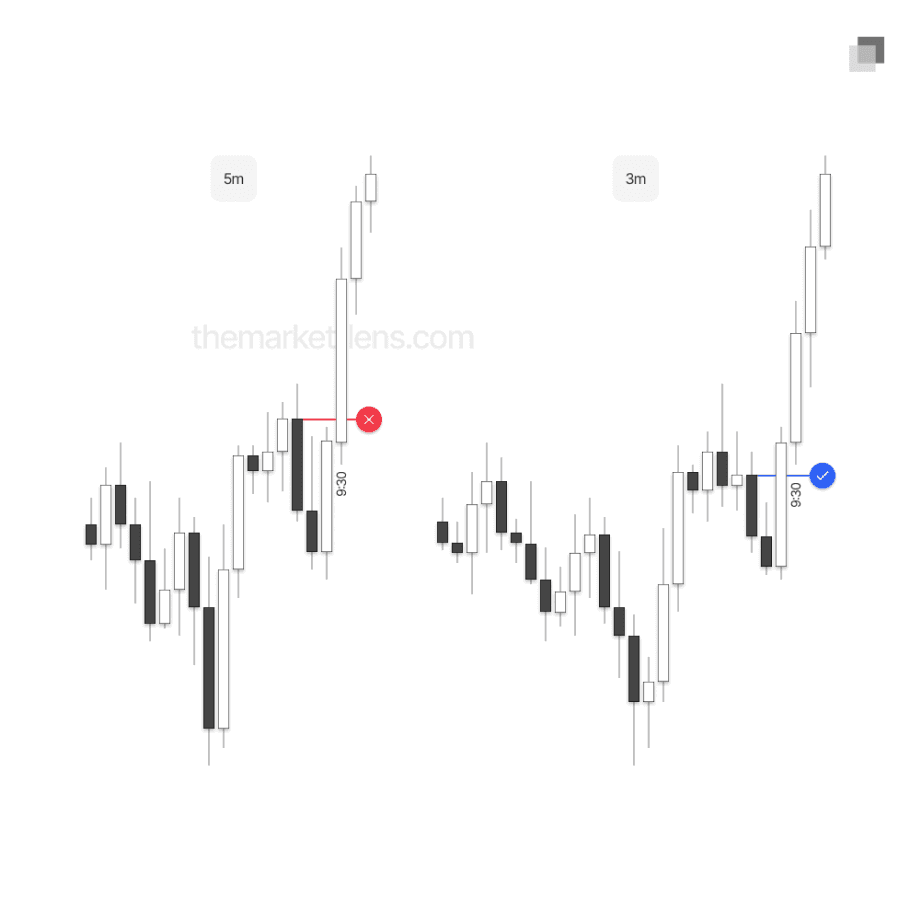
If a 5-minute entry signature lacks quality in its structure, the same signature can be viewed on a lower timeframe alignment. This often provides a clearer perspective, making the close through more defined and suitable for execution.
If a 5-minute entry signature lacks quality in its structure, the same signature can be viewed on a lower timeframe alignment. This often provides a clearer perspective, making the close through more defined and suitable for execution.
If a 5-minute entry signature lacks quality in its structure, the same signature can be viewed on a lower timeframe alignment. This often provides a clearer perspective, making the close through more defined and suitable for execution.
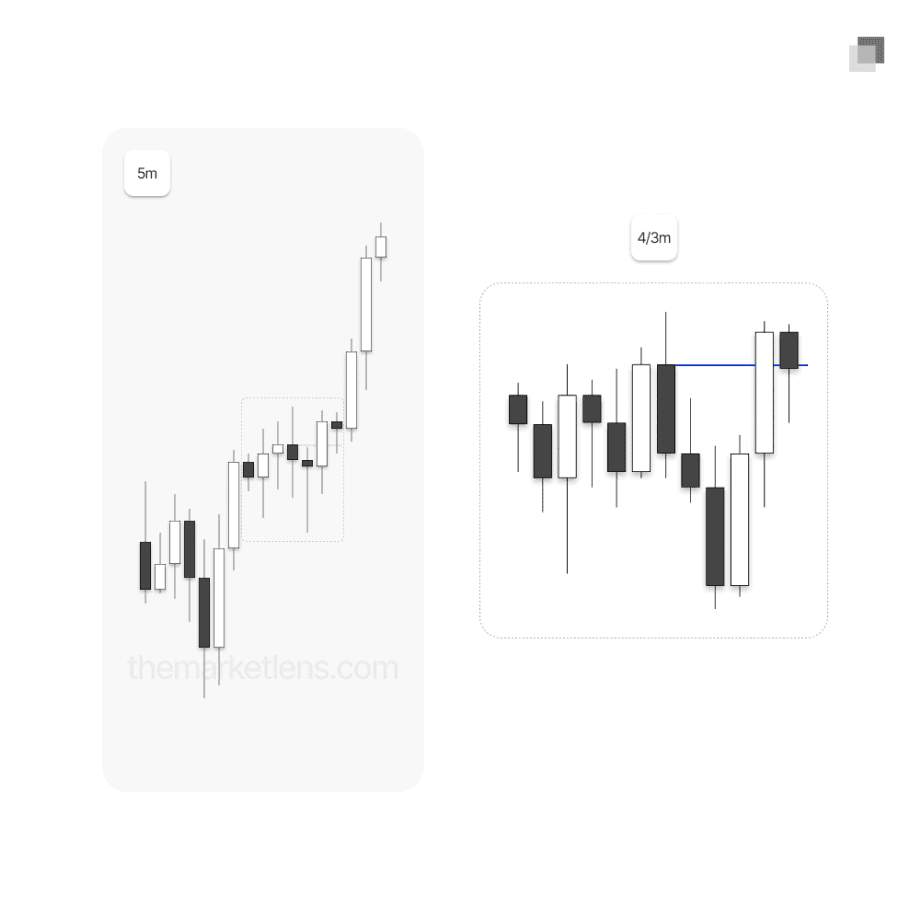
If a confirmed entry signature is absent on the baseline timeframes and price is developing in a way that suggests it may break away before presenting an entry, the timeframe can be refined downward to identify a new signature and secure a position. This action, however, comes with strict conditions. It must only be applied to setups held with high conviction, and the entry signature on the refined timeframe must remain valid. Without both conditions met, the decision shifts from rational execution to a forced reaction driven by fear of missing a move.
If a confirmed entry signature is absent on the baseline timeframes and price is developing in a way that suggests it may break away before presenting an entry, the timeframe can be refined downward to identify a new signature and secure a position. This action, however, comes with strict conditions. It must only be applied to setups held with high conviction, and the entry signature on the refined timeframe must remain valid. Without both conditions met, the decision shifts from rational execution to a forced reaction driven by fear of missing a move.
If a confirmed entry signature is absent on the baseline timeframes and price is developing in a way that suggests it may break away before presenting an entry, the timeframe can be refined downward to identify a new signature and secure a position. This action, however, comes with strict conditions. It must only be applied to setups held with high conviction, and the entry signature on the refined timeframe must remain valid. Without both conditions met, the decision shifts from rational execution to a forced reaction driven by fear of missing a move.

The standard for trading education and guidance
2026 The Market Lens - All Rights Reserved
The standard for trading education and guidance
2026 The Market Lens - All Rights Reserved
The standard for trading education and guidance