


Opposing Candles
Opposing Candles
Opposing Candles
Signatures in the continuation
Signatures in the continuation
Signatures in the continuation
Lesson 3
Lesson 3
Lesson 3
20 min
20 min
20 min
Opposing Close Candles
Opposing Close Candles
Opposing Close Candles
Opposing close candles are used for either support or resistance when the market is in the continuation.
Opposing close candles are used for either support or resistance when the market is in the continuation.
Opposing close candles are used for either support or resistance when the market is in the continuation.
When the market is in a confirmed continuation, opposing close candles are expected hold price throughout the expansion to the objective. Downclose candles will support price when bullish and upclose candles will resist price when bearish.
When the market is in a confirmed continuation, opposing close candles are expected hold price throughout the expansion to the objective. Downclose candles will support price when bullish and upclose candles will resist price when bearish.
When the market is in a confirmed continuation, opposing close candles are expected hold price throughout the expansion to the objective. Downclose candles will support price when bullish and upclose candles will resist price when bearish.
This is a signature that is exclusive to expansion markets. Without a narrative for a directional expansion, there is no consistency to this expectation.
This is a signature that is exclusive to expansion markets. Without a narrative for a directional expansion, there is no consistency to this expectation.
This is a signature that is exclusive to expansion markets. Without a narrative for a directional expansion, there is no consistency to this expectation.
Confirmation
Confirmation
Confirmation
The same logic of the change in state of delivery can be applied when using confirmations for opposing close candles within a continuation.
The same logic of the change in state of delivery can be applied when using confirmations for opposing close candles within a continuation.
The same logic of the change in state of delivery can be applied when using confirmations for opposing close candles within a continuation.
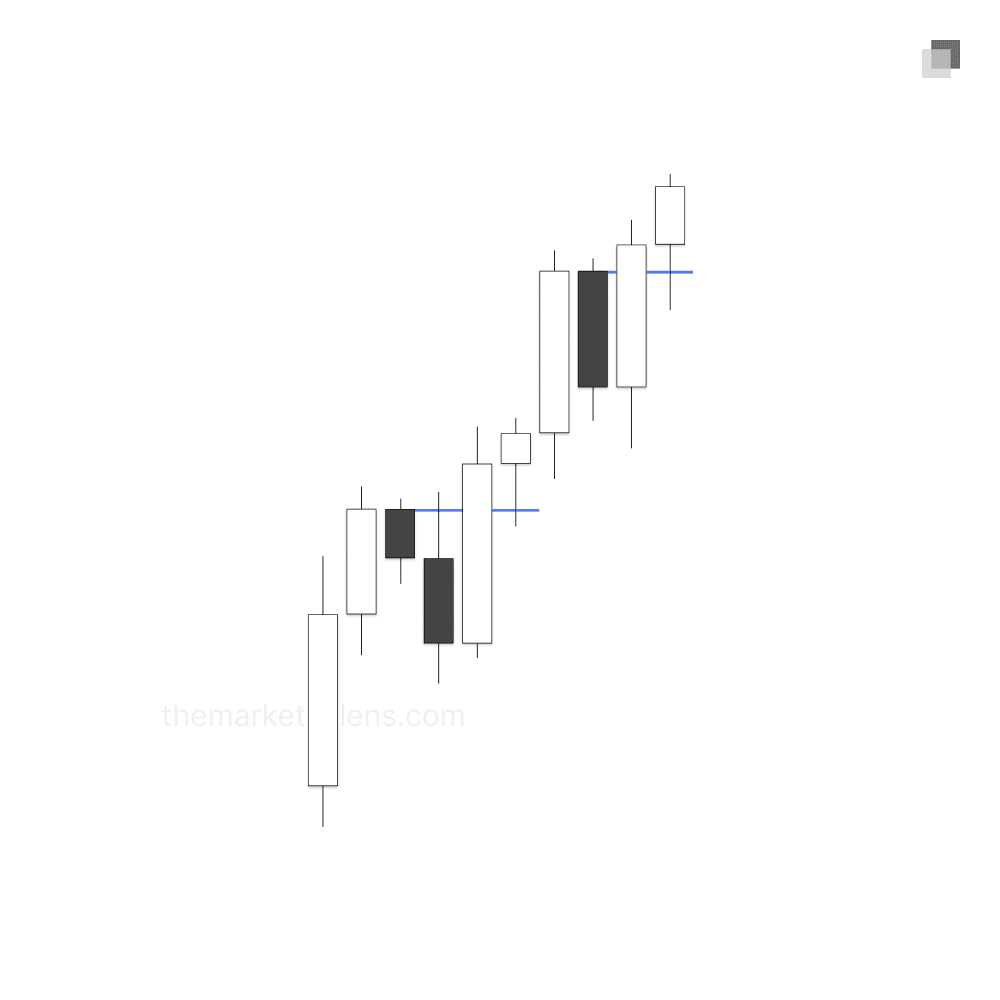
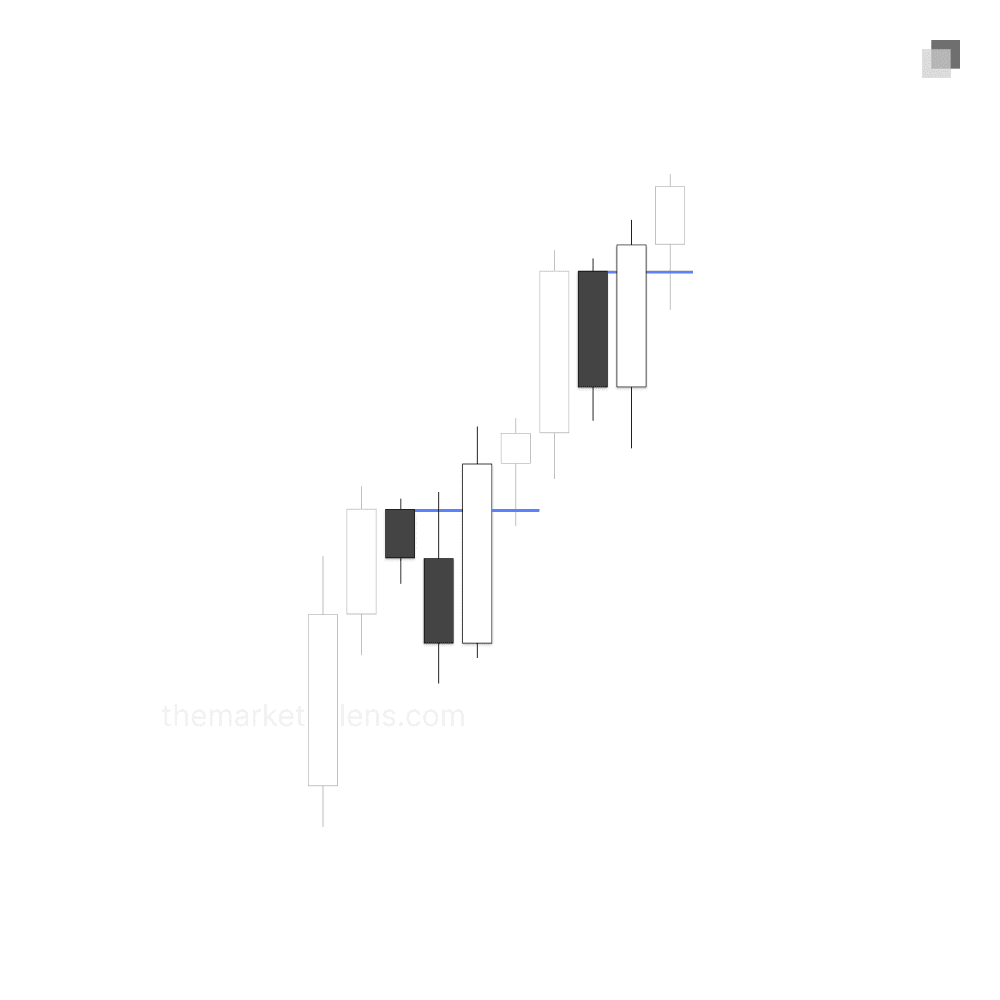
To confirm a downclose candle protected low within a continuation, the confirmation is the close above the opening price of the highest downclose candle which started the opposing run lower. To confirm an upclose candle protected swing within a continuation, the confirmation is the close below the opening price of the lowest upclose candle which started the opposing run higher.
To confirm a downclose candle protected low within a continuation, the confirmation is the close above the opening price of the highest downclose candle which started the opposing run lower. To confirm an upclose candle protected swing within a continuation, the confirmation is the close below the opening price of the lowest upclose candle which started the opposing run higher.
To confirm a downclose candle protected low within a continuation, the confirmation is the close above the opening price of the highest downclose candle which started the opposing run lower. To confirm an upclose candle protected swing within a continuation, the confirmation is the close below the opening price of the lowest upclose candle which started the opposing run higher.
Selection
Selection
Selection
How do you know which opposing close candles to focus on while in the continuation?
How do you know which opposing close candles to focus on while in the continuation?
How do you know which opposing close candles to focus on while in the continuation?
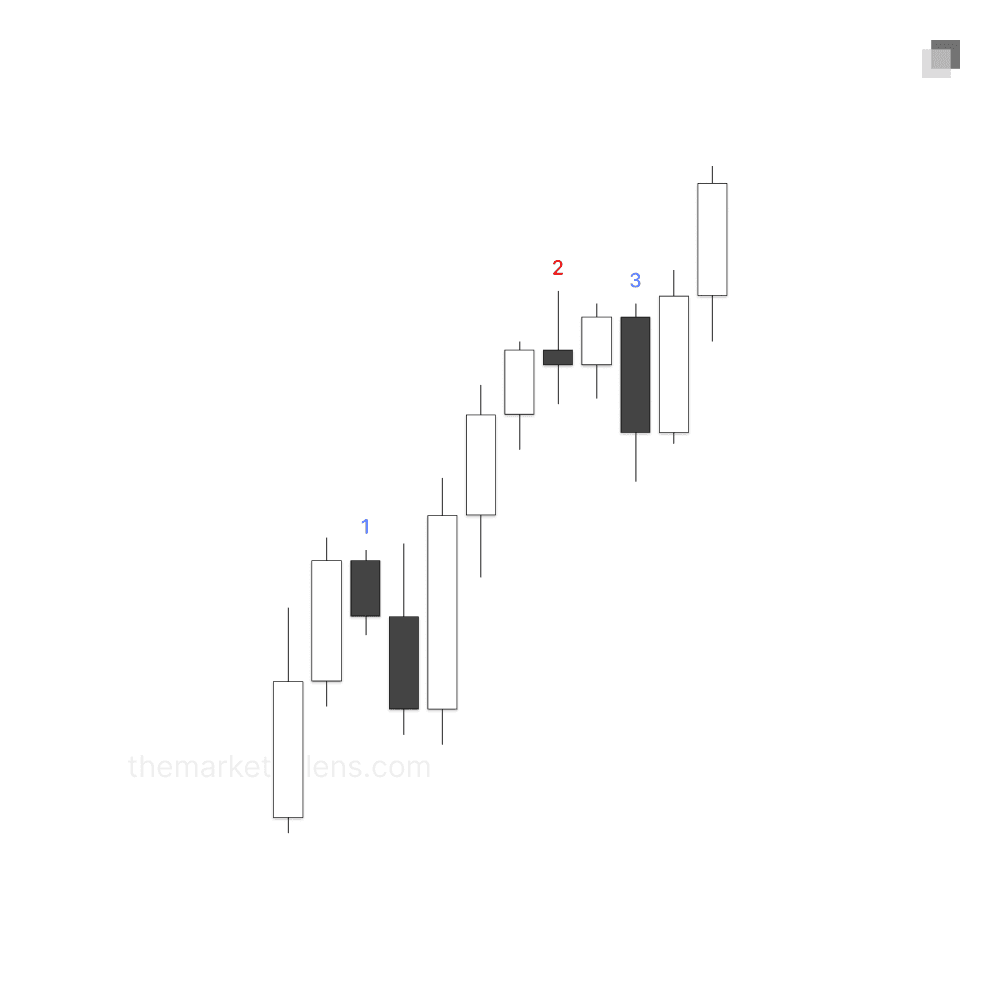
The general rule is to look for is a single or series of opposing close candles which have bulky candle bodies with a wider range. Upon the close through for confirmation, this is a scenario that a protected swing is formed at the other side of the series of opposing close candles. Since price does not make deep retracements during expansions, it is the expectation that the wider ranged opposing close candles will hold price. Candle one shows a series of opposing candles and candle three shows a single opposing candle in the image below.
The general rule is to look for is a single or series of opposing close candles which have bulky candle bodies with a wider range. Upon the close through for confirmation, this is a scenario that a protected swing is formed at the other side of the series of opposing close candles. Since price does not make deep retracements during expansions, it is the expectation that the wider ranged opposing close candles will hold price. Candle one shows a series of opposing candles and candle three shows a single opposing candle in the image below.
The general rule is to look for is a single or series of opposing close candles which have bulky candle bodies with a wider range. Upon the close through for confirmation, this is a scenario that a protected swing is formed at the other side of the series of opposing close candles. Since price does not make deep retracements during expansions, it is the expectation that the wider ranged opposing close candles will hold price. Candle one shows a series of opposing candles and candle three shows a single opposing candle in the image below.
Both a single or series of opposing close candles with a small ranged candle body and wick are invalid. Upon the close through, this does not serve as a confirmation for a protected swing. It is not expected that price will remain in respect to the invalidation point. The scenario below shows how the market does not respect the close above candle two due to the small ranged candle body.
Both a single or series of opposing close candles with a small ranged candle body and wick are invalid. Upon the close through, this does not serve as a confirmation for a protected swing. It is not expected that price will remain in respect to the invalidation point. The scenario below shows how the market does not respect the close above candle two due to the small ranged candle body.
Both a single or series of opposing close candles with a small ranged candle body and wick are invalid. Upon the close through, this does not serve as a confirmation for a protected swing. It is not expected that price will remain in respect to the invalidation point. The scenario below shows how the market does not respect the close above candle two due to the small ranged candle body.
The specific confluences for opposing candles will be explained in their respective lessons later in this course.
The specific confluences for opposing candles will be explained in their respective lessons later in this course.
The specific confluences for opposing candles will be explained in their respective lessons later in this course.
Invalidation
Invalidation
Invalidation
In the same way it is applied for manipulations, the point of invalidation for opposing close candles varies depending on the step in the model being applied.
In the same way it is applied for manipulations, the point of invalidation for opposing close candles varies depending on the step in the model being applied.
In the same way it is applied for manipulations, the point of invalidation for opposing close candles varies depending on the step in the model being applied.
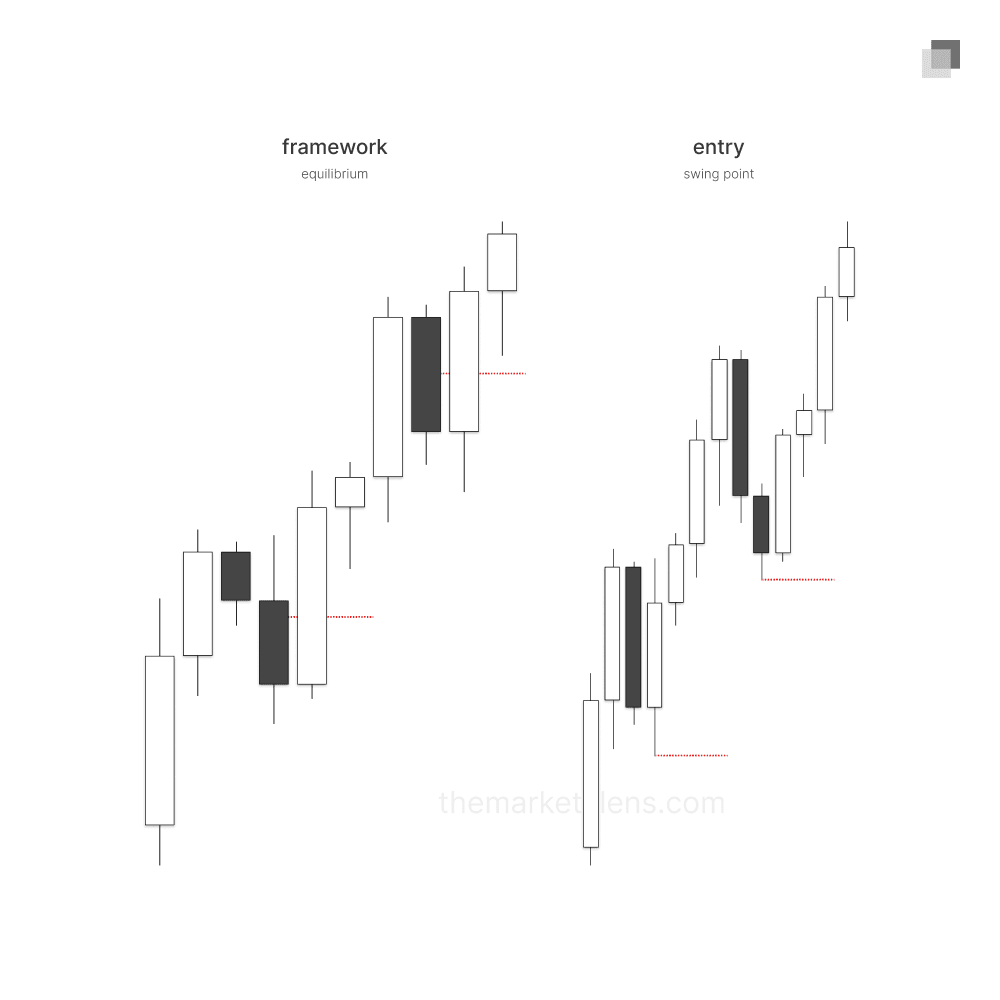
When being used as higher timeframe framework, the invalidation is a close through the fifty percent level from the highest candle body to the lowest candle body. These timeframes are used to frame narrative and confirmation which is favored to see respect of the upper fifty percent of downclose candles when bullish or the lower fifty percent of upclose candles when bearish.
When being used as higher timeframe framework, the invalidation is a close through the fifty percent level from the highest candle body to the lowest candle body. These timeframes are used to frame narrative and confirmation which is favored to see respect of the upper fifty percent of downclose candles when bullish or the lower fifty percent of upclose candles when bearish.
When being used as higher timeframe framework, the invalidation is a close through the fifty percent level from the highest candle body to the lowest candle body. These timeframes are used to frame narrative and confirmation which is favored to see respect of the upper fifty percent of downclose candles when bullish or the lower fifty percent of upclose candles when bearish.
When used as an entry signature, the invalidation is trading through the swing point which was considered protected. This timeframe is used for entries and the protected swing point is where stop losses are placed. Never place a stop loss internally within the opposing close candles on an entry. Always at the high or low on the other side of the opposing candles.
When used as an entry signature, the invalidation is trading through the swing point which was considered protected. This timeframe is used for entries and the protected swing point is where stop losses are placed. Never place a stop loss internally within the opposing close candles on an entry. Always at the high or low on the other side of the opposing candles.
When used as an entry signature, the invalidation is trading through the swing point which was considered protected. This timeframe is used for entries and the protected swing point is where stop losses are placed. Never place a stop loss internally within the opposing close candles on an entry. Always at the high or low on the other side of the opposing candles.

The standard for trading education and guidance
2025 The Market Lens - All Rights Reserved
The standard for trading education and guidance
2025 The Market Lens - All Rights Reserved
The standard for trading education and guidance
2025 The Market Lens - All Rights Reserved
The standard for trading education and guidance